
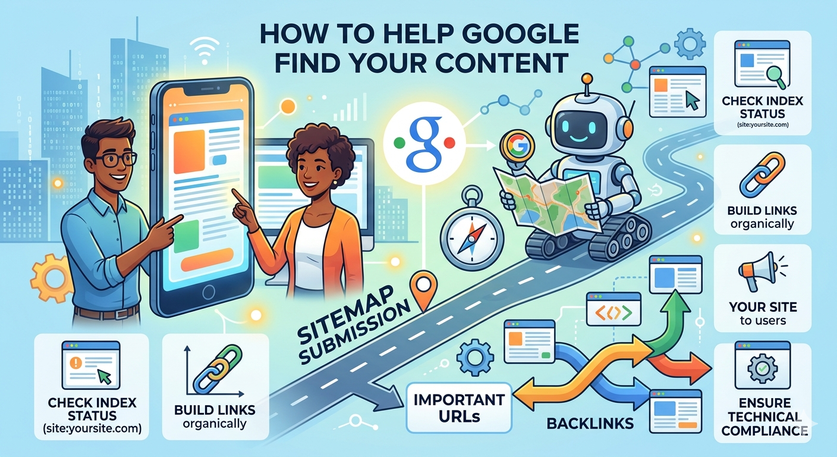
Before diving into the steps below, first check if your content is already indexed — you might find there is nothing left to do! You can verify this by using the site: search operator.
Try searching for your domain like this: site:yourdomain.com. If your pages appear in the results,
Google has already found you. For example, here are the results for a search on site:wikipedia.org. If your
site doesn't appear, ensure it meets Google’s technical requirements.
How Discovery Works
Google primarily discovers new pages through links from other pages it has already crawled. These "backlinks" often occur naturally over time as other websites cite your content. Beyond waiting for organic links, you can take a proactive role by promoting your site to help users find your work.
Advanced Methods
For those looking for a more robust solution, you can submit a Sitemap. This is a file containing all the important URLs on your site that acts as a roadmap for search engines. While many modern Content Management Systems (CMS) handle this automatically, it isn't strictly mandatory.
Pro Tip: Your primary focus should always be on sharing your site with real users. When you prioritize human engagement, search engine discovery often follows naturally.
Key Edits & Improvements Made:
-
Clarity: Changed "more complicated but effective way" to "more robust solution" to sound more professional.
-
Terminology: Used standard SEO terms like "indexed," "crawled," and "backlinks" to provide more educational value.
-
Formatting: Used a blockquote for the final tip to emphasize the most important takeaway for a student or beginner.
-
Flow: Improved the transition between checking index status and taking action.
Write a comment