
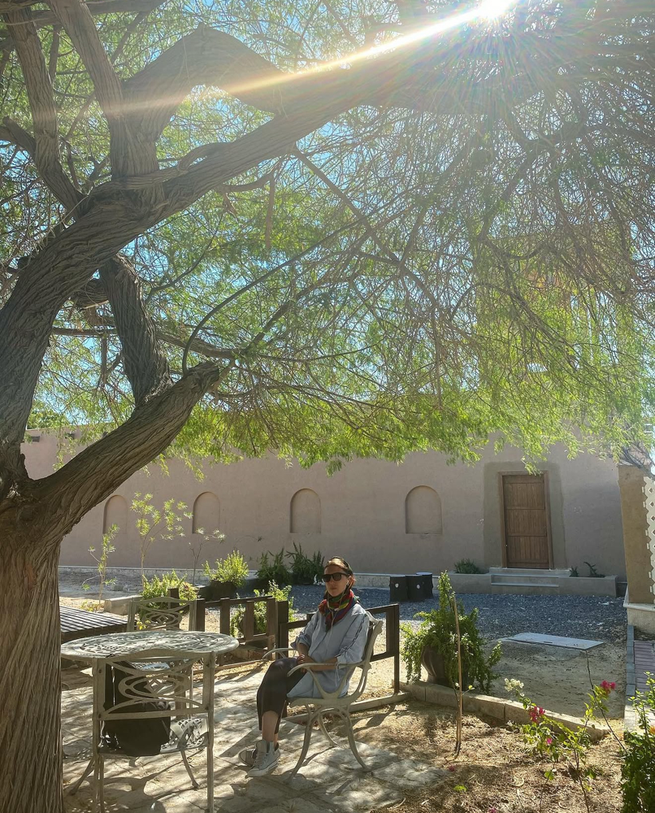
The turquoise, silk-like waves of the Persian Gulf gently roll onto the soft, milky-white sands of Kish Island, resembling the delicate foam atop a morning cup of coffee.
How many secrets do these waters hold? Whom have they witnessed over the centuries, besides Afanasy Nikitin and Marco Polo?

One sunny morning on Kish Island, we met our friends Nadia and Mehdi at the beach. Nadia was from Ukraine but had already been living on the island for several years with her Iranian husband.
I had always been fascinated by their love story. Years earlier, this brave young woman had traveled to Kish alone as a tourist. She was welcomed by a group of locals, and among them was the man who would later become her husband.
She once admitted that she hadn’t even noticed him at first.

As soon as they met, the group took her straight to the beach. Excited to swim in the warm waters of the Persian Gulf, she started taking off her outer clothes, under was her swimsuit. Suddenly, everyone began shouting and rushing toward her. At first, she couldn’t understand why a group of grown men was running at her in panic.
Only after they explained the local rules and customs regarding public behavior did she realize what was happening. Swimming in a swimsuit on a public beach was not permitted.
That day, the four of us decided to go snorkeling to admire the incredible underwater world of the Persian Gulf once again. The water was crystal clear, sunbeams danced through the sea, and colorful schools of fish surrounded us.
Suddenly, Nadia emerged from the water.
She held her mask in one hand and a small metal plaque in the other, which she had found on the seabed.
We gathered around to examine it.
Its entire surface was covered with mysterious symbols, strange inscriptions, and markings that resembled ancient magical runes.
“It looks like it says something ominous,” I said hesitantly. “Maybe we should throw it back. What if it’s better not to disturb something that has rested on the ocean floor for so long?”
My husband smiled.
“But what if it’s the opposite? Maybe it’s a good sign. Who knows… perhaps one day we’ll all be walking together in Canada.”
We laughed.
At the time, it sounded like nothing more than a joke—a distant fantasy.
Nadia took a photograph of the plaque before gently tossing it back into the depths of the Persian Gulf.

Only a week later, everything changed.
Russia launched its full-scale invasion of Ukraine.
Time seemed to lose its familiar rhythm. Events unfolded so quickly that life suddenly became divided into two chapters: before and after.
About six months later, the four of us were, unbelievably, walking together through the streets of Vancouver.
That was the moment I remembered my husband’s words.
Nadia often thought about the mysterious plaque. Whenever she mentioned it, there was a slight tremble in her voice.
“What if we really awakened something that day?” she would ask. “Or was it simply an impossible coincidence?”
Perhaps we’ll never know.
It was only after arriving in Canada that I fully realized how deeply my years in ancient Persia had transformed me.
Will I ever return there?
I honestly don’t know.
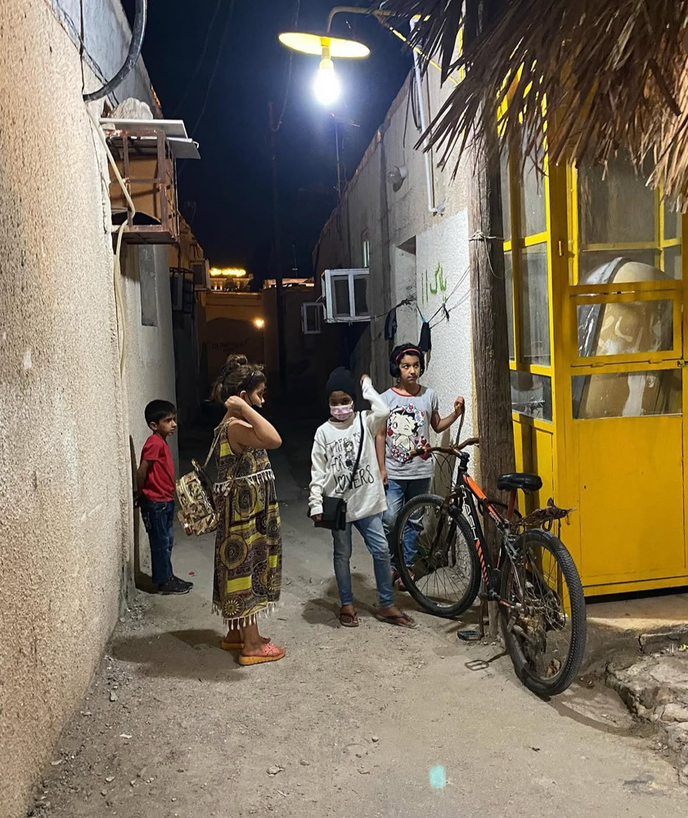
Long before I met my husband, Canada had been my dream. I imagined it as a country where everything was beautiful, peaceful, and just as it should be.
Today, I understand something different.
Had I come here without first experiencing life in the Middle East, my inner world would never have reached the depth it has today. To truly appreciate a place like this, you need an anchor within yourself.
Persia taught me to observe the world more carefully, to find beauty in simple things, to ask more questions instead of searching for easy answers, and to trust my inner compass.
I don’t know whether I will ever return to Iran.
But I do know one thing.
I am deeply grateful for this journey.
Listen to your heart. Don’t let the news define the way you see the world. Travel. Discover other cultures. Stay open to people and to life.
Because it is often beyond the familiar that we encounter the most meaningful meetings—not only with others, but with ourselves.
Write a comment