
In Iran, I found more than just a new family; I found true friends with the most sincere smiles. Among them is an artist. A gentle melancholy, a refined aesthetic taste, a sense of peace, and kind thoughts—that is all him. He was once a student at a university in Kyiv, so we shared plenty of common ground.
Together, we climbed mountain peaks and breathed in the Caspian sea breeze, but the trip to the "red village" of Abyaneh etched itself most deeply into my memory. The settlement is over two thousand years old and is considered one of the oldest in Iran—though it feels as if the entire country is woven from ancient history. My friend’s great-aunt lived in the village. We set off early in the morning and by noon, after crossing the Karkas mountain range, we found ourselves among the red rocks.
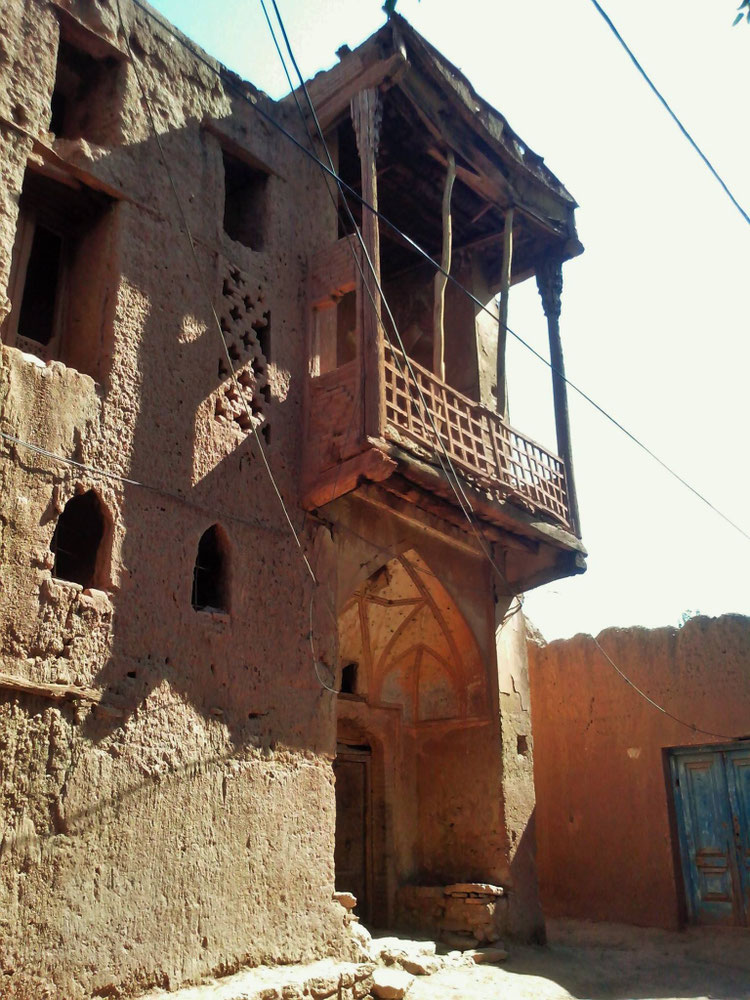
Abyaneh (also known as Viona) is more than a destination; it is a living museum. Its distinctive red hue comes from the high iron oxide content in the local soil, which the villagers have used for centuries to build their stepped, mud-brick homes.
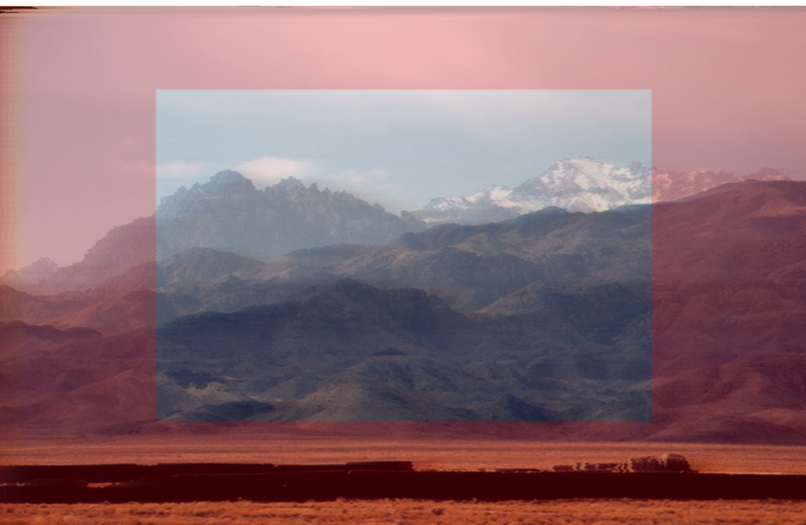
Vultures soar in these mountains, and archaeological finds suggest that people lived here in exactly the same way thousands of years ago. In ancient times, Zoroastrianism was the primary religion of Persia. It always seemed to me that the keys to understanding the existence of the world were hidden within these teachings, and I had long dreamed of visiting one of the old fire temples.
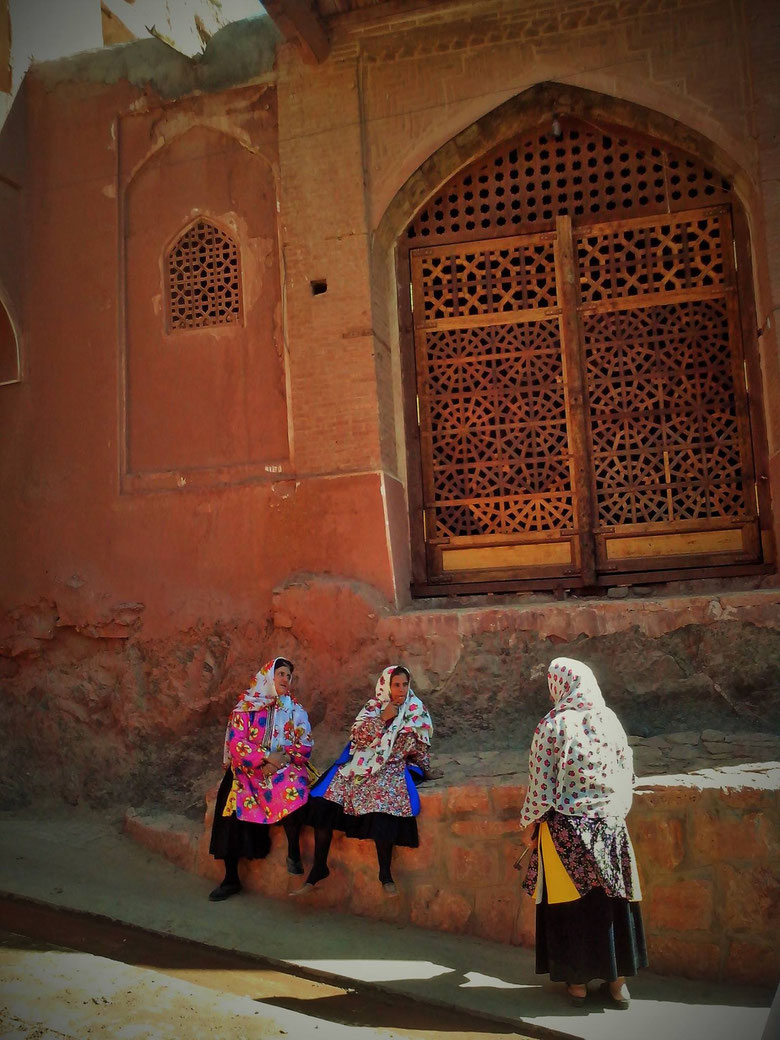
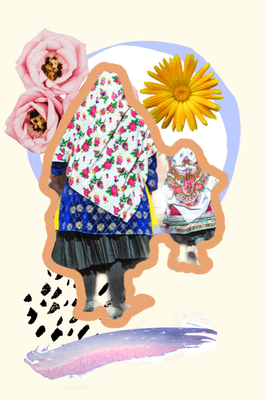
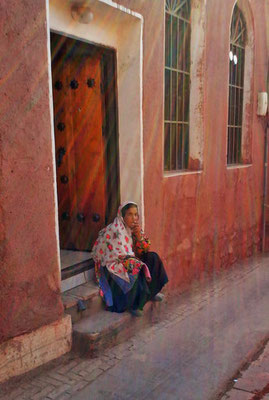
And here we are, walking down a narrow street paved with clay. Beside us stand red houses made from a mixture of clay, straw, and grass. The vibrant headscarves of the local grandmothers immediately catch the eye; they only ever go out—even just for bread—in their traditional costumes. It is wonderful and strange that they do not rebel against these customs but instead sustain the pulse of a living tradition. The men, conversely, shied away from the camera, the fabric of their wide trousers rustling as they moved. This authenticity of dress, combined with the unique architecture, instantly transported us to another world.
The clay houses, seemingly stuck to one another, were saturated with the breath of millennia—it drifted from every corner. Grapevines entwined heavy wooden doors, past which water channels rushed downward, piercing deep into old orchards. The crumbling walls of ruins sat alongside surviving homes, all drowning in dust. "Everything eventually turns to ash," they believe in Abyaneh.

We knocked on a heavy red door and waited patiently. Finally, a woman's voice and firm footsteps were heard. A moment later, we were met by a neat grandmother dressed in traditional costume, with thick black eyebrows and a face lightly lined with wrinkles. She smiled and invited us inside. The house smelled of fresh renovations, and many things were out of place. Climbing the stairs to the second floor, I noticed a lush, multicolored skirt in the next room. This piece of daily wardrobe hung quietly over the back of a chair, waiting for its owner. For a moment, I desperately wanted to try on the outfit in secret—my gaze couldn't help but trace every fold, exploring the details.
We stepped out onto a red balcony flooded with sunlight. The aunt treated us to raisins and apologized for the mess. I couldn't resist giving a compliment to her skirt. She beamed and spoke of the special relationship they have with their clothing. The most precious item is the wedding dress, passed down through generations from mother to daughter. Even when someone from the village goes to the city and wears modern clothes, they only ever return home in their traditional dress.

After visiting for a while, we moved on to the old fire temple, which has survived since the Sassanid era. It stood abandoned near the village in a nearby valley. After a picturesque trek, we reached the temple. The front door was open, but no one was inside. My friend noted that it is usually locked, but we were lucky—the building was being actively restored. Tools and fresh planks lay on the floor, though the workers were nowhere to be seen.
According to Zoroastrianism, a fire must always burn in the prayer room; it is the primary sacred element and the embodiment of divine justice. In the corner, black soot marks from the flame were visible, and a portrait of Zoroaster hung nearby.
We lit a fire near the temple and rested for a bit. Nearby, a mountain stream rushed, the air hummed with birdsong, and in the distance, the village glowed red. It resembled a honeycomb clinging to the mountain. I broke off some branches of a thorny herb and put them in the car. I wanted to take its scent home with me—along with the memories.
Write a comment