
From the borders of Sejestan
To the distant groves of Khorasan
The light Peris were flying.
Shadows fell upon the plains,
And silent were the valleys
Where once blood had flowed;
Where the cries of the Horde resounded,
Where the voice of the Korna howled,
And upon the corpses that great one (*),
That terrible one, feasted—
The one who rushed upon kingdoms and nations
Like a roaring storm,
And, like a whirlwind of foul weather,
Breathed destruction!
— “Div and Peri”
by Andrii Podolynskyi
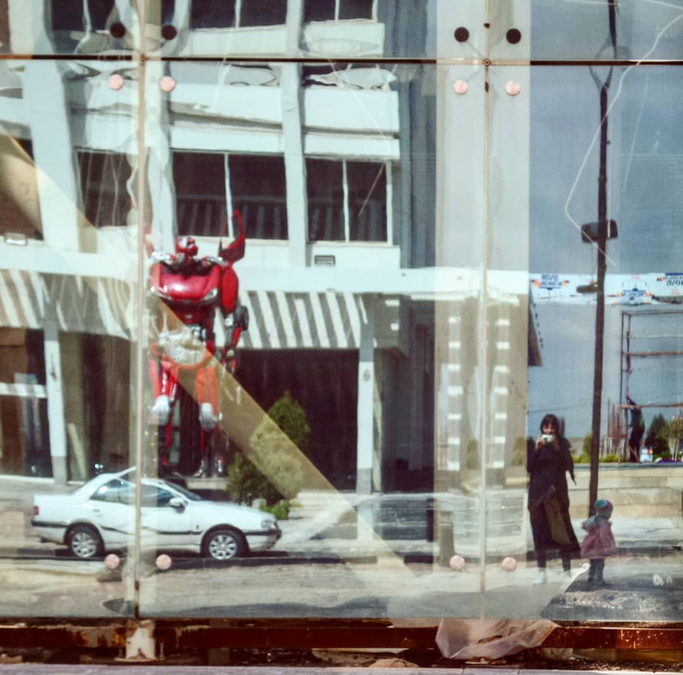
The air smelled of spring. I was welcoming another Nowruz in Iran. Wherever I entered, on every table stood sprouted green wheat, a small bowl with a gold or red fish inside, and other attributes of the spring equinox celebration. By the way, the symbol of the red fish was borrowed by the Iranians from the Chinese, just like the famous Persian miniatures. In the center stood a mirror and either the Quran or the verses of Hafez.

A week before the holiday, the whole capital was covered with carpets hanging from balconies and fences, while Iranian housewives carefully washed the most hidden corners of their homes so that only clean energy and a sunny mood would enter with the New Year.
This year, to put it mildly, we were unlucky with the weather—half of Iran was practically drowning. The news warned about the possibility of flooding in Tehran and advised people not to have picnics along the rivers. It felt a little unsettling after a massive stream of water in Shiraz rushed through the Quran Gate, sweeping away cars and people. What if nature decided to unleash its ambitions in the capital as well? The fear of earthquakes faded into the background.
The New Year holidays were dripping down the windows like raindrops and promised no exciting trips. We stayed at home. In the mornings we could hear neighbors happily driving out of the parking lot to travel with their families. Another Iranian family ignored the safety warnings and left to celebrate the New Year according to all traditions.
Finally, the boring two-week holiday came to an end. Suddenly my husband’s parents decided to visit Mashhad. They had already bought train tickets and, of course, invited us to join them.
Mashhad is considered one of the most religious cities in Iran, a spiritual center for Shiite Muslims, and, according to many people, there is absolutely nothing there for an ordinary tourist to see. Perhaps exactly for this reason I wanted to see it with my own eyes. After checking the weather and road safety—making sure there would be no rain—we decided to follow my husband’s parents, but by car so we could see more along the way.
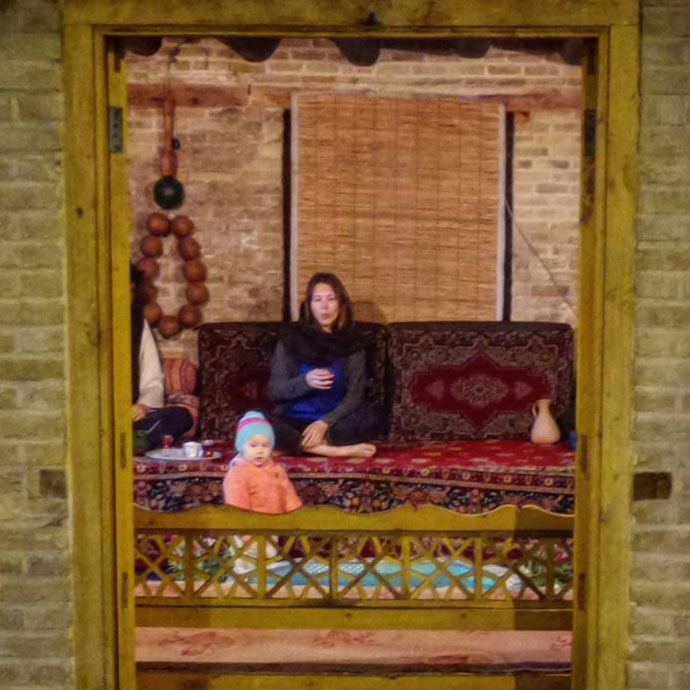
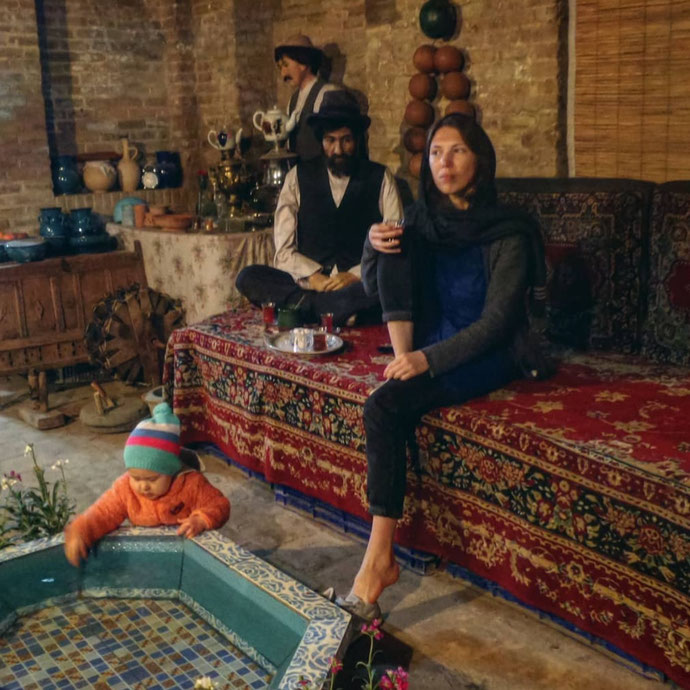
Once again incredible desert landscapes rushed past the car windows—beautiful and at the same time frightening. Thoughts swarmed in my head. My husband was driving, a man from another world, who had learned since childhood to read from right to left. Only with him do I feel protected and in my place. Always connected.
Most of the time on the road we remained silent, sharing a full understanding without words, almost in a meditative state. The road is my favorite meditation—only then do I truly feel free. And only occasionally the silence was broken by sudden exclamations: “Look to the left! Incredible!” “Turn to the right! What a view!”
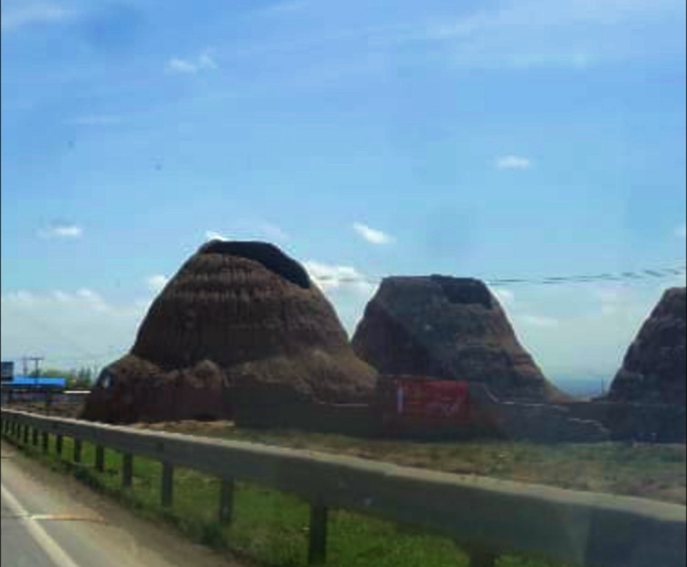
Then it began to rain—light, gentle, but suspicious. The air smelled damp. Ahead appeared ancient ice houses that the Persians had learned to build two thousand years ago.
Our first stop was near the khāneqāh of Abu al‑Hasan Kharaqani. Have you heard of him?

I love Persian philosophy. First of all because it flows with wise teachings and deep thoughts. And of course because these quotes constantly push one forward spiritually. Later those phrases float up in the mind like a mantra at the most unexpected moments of life.
Sheikh Kharaqani is considered in Iran one of the most prominent Sufis. He lived in the late 10th and early 11th centuries. Even today travelers who have lost their way and those seeking answers come to his khāneqāh.
What is a khāneqāh?
It is a stopping place for travelers that once played an important social and political role in Iranian society. A thousand years ago, when exhausted travelers reached a city on the edge of the desert—which occupies a third of the country—they could count on generous hospitality there for several days. But these were not caravanserais. Here lodging was combined with Sufi rituals, practices of self-discipline, and moral purification.
Above the door of Sheikh Kharaqani’s khāneqāh was written:
“Whoever enters this house will be given bread—do not ask about his faith.
For whoever is worthy of the soul granted by the Almighty is surely worthy of the bread of Abu al-Hasan.”
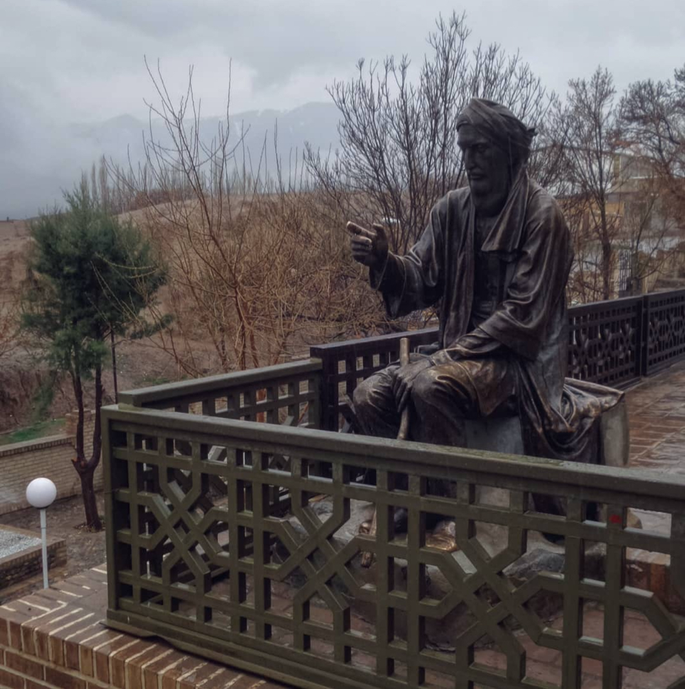
He opposed ethnic division and any human superiority over another. This was the main message of the life he devoted—with faith in his heart—to all who came to him with questions and requests.
If you plan to dive into Persian literature, begin with the story by Jalal ad‑Din Rumi about “Sheikh Kharaqani and His Wife.”
I do not know why, but the moment we entered Kharaqani’s mausoleum, my little daughter began to pray. Of course her Muslim grandmother had shown her how to do it properly, yet it surprised me—she had never done it before. And I must add, I never saw her do it again afterward.
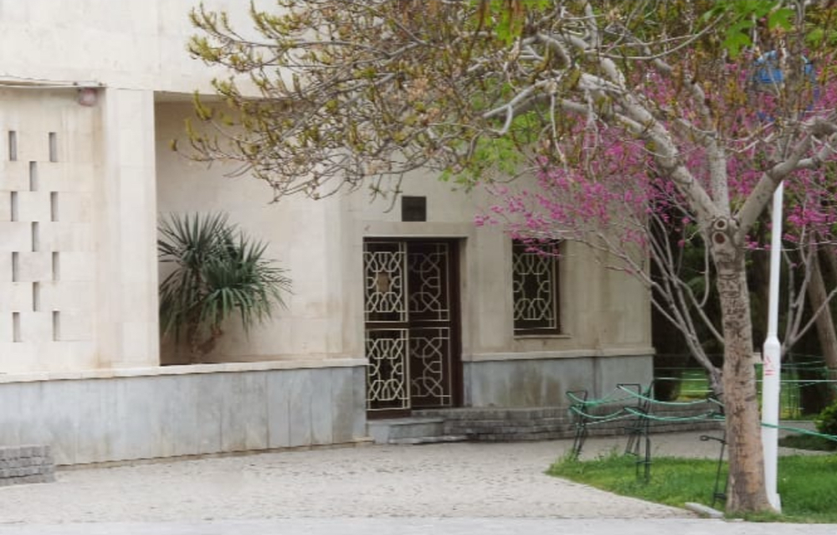
Inside, the building was decorated with ancient plasterwork and tiles with Islamic ornamentation. A pleasant silence filled the space, and the fresh damp air tasted especially sweet.
After spending the night in a small nearby town, we set off again—following the traces of Marco Polo.
Our next stop was near the ruins of an abandoned caravanserai. The remaining walls stood by the highway—once there was no asphalt here, yet the road already existed.
Respect for the sacredness of life and appreciation for the blessings of creation in Persian culture combine with a deep sense of the ephemeral nature of human existence. Life is seen like a caravan from distant horizons that stops briefly at the caravanserai of this world, only to disappear again into the endless spaces beyond it.
Two old mulberry trees grew near the red clay ruins—survivors, witnesses of the past. Only they knew how many caravans loaded with spices and fabrics passed through these gates, how many tired travelers rested here before continuing their journeys the next morning.
On the East, the mulberry tree is considered sacred and symbolizes life. People believe the plant has magical power that protects against evil. Even the stages of berry ripening are associated with human life:
white—innocent childhood, red—maturity, black—old age and death.
According to legend, Alexander the Great drank mulberry vodka during his victorious march toward Persia and India.
A small spring flowed at the foot of the tree, giving it new strength for another year of life. Clouds clung to the mountain peaks. The desert slowly began to turn green.
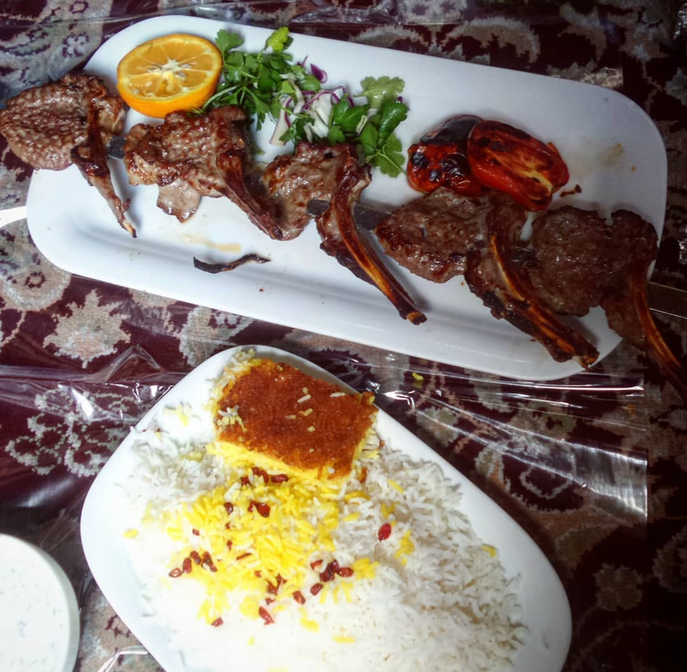
Then, along the highway, a bright violet stripe appeared—floating between earth and sky. Later my father-in-law asked if I had seen the saffron fields. Only then did I understand what that stripe had been. The world’s most expensive spice is grown here in the province of Khorasan. In Iran every housewife loves and knows how to use this magical spice—adding it to rice, meat, ice cream, drinks, and tea. It is also widely used in traditional medicine.
Soon brown hills covered with yellow flowers appeared. When I saw a sign saying “Caution: Persian cheetahs,” a wave of happiness rushed through me.
This graceful wild cat now survives only in Iran. Once they lived from Arabia to India, including Afghanistan. Recent studies show that only about 70–100 Asiatic cheetahs remain.
After traveling 670 kilometers we finally reached Nishapur, the hometown of Omar Khayyam. He is buried there.

In Persian poetry there is always an appreciation of the beauty of each moment combined with awareness of its impermanence. This idea lies at the heart of Khayyam’s rubaiyat.
Nearby we visited the mausoleum of the philosopher and Sufi poet Farid ad‑Din Attar.
On the way we met a woman who looked like a gypsy. She asked for money. My husband gave her a few bills, and in return she told us the main reasons that prevent success in life. In my case, she said, it was the envy of friends. Only years later did I realize how right she had been.
Standing near Attar’s grave, my husband told the story of how he became a dervish.
Attar once owned a prosperous pharmacy where he sold medicines. One day a dervish entered and asked him for bread. The owner responded rudely: “Go work for it.”
“How will you die if you are so greedy?” the dervish asked.
“And how will you die?” Attar replied.
“Like this.”

The wanderer lay down on the floor and died. After that, Attar abandoned everything and went to live in the desert.
Years later, when he returned home, Mongols invaded the city and took him captive. People offered large sums for his release because his spiritual reputation was widely known. But Attar kept saying he was worth much more and should not be sold for such a low price.
During one journey with the Mongols he met a man who offered a piece of bread in exchange for him.
“That is my price,” Attar answered.
He was killed immediately.
Mashhad is the second largest city in Iran and the main producer of Pepsi in the country. Modern, well kept, and sacred to many believers. Its name means “place of martyrdom.” The city is built around religious tourism. Every year millions of pilgrims come here, many traveling the entire distance on foot.
Morning—the best time of day. We went out to explore the almost empty city and search for fragrant coffee. The area around the revered Imam Reza Shrine was full of expensive hotels, but entering them without invitation was nearly impossible. Even the lobby was closed to us.
Like the rest of Iran, the city was decorated with huge portraits of heroes of the Iran-Iraq war. Wide highways, well-kept parks, and blooming pink trees stretched toward the mountains that seemed to hold back the rapid expansion of the million-person city.

Write a comment