

At first, it felt strange: the new girl in our Persian language class always chose the seat next to me. Her name was Maryam. She had recently moved to Iran with her family from Pakistan — a country where her dream was meant to take shape.
Her hijab was worn with strict precision, allowing not a single strand of hair to slip free. Above her sun-warmed skin set thick, black eyebrows and dark brown eyes—eyes in which something quietly sang and softly glimmered. Maryam had come to Tehran to enter medical school; in many regions of her homeland, skilled doctors were in short supply, and without mastering Persian, the path to that knowledge remained closed.
Each morning, Valiasr Street—the capital’s longest and most vibrant artery—pulsed with life from the earliest hours. At every intersection, taxi drivers called out to passersby, beckoning them into their cars. Bakeries drew small, steady crowds: some people waited patiently for fresh bread, while others brushed hot barbari loaves at special tables. . Swept up in this morning rhythm, I, too, hurried toward my Persian class.

Our building stood not far from the university, so I always left early and walked. Not out of necessity, but out of love. I listened to music, watched the city breathe, and felt that this daily walk was one of my quiet joys. Many Iranian women found it hard to believe that I covered this distance by choice. Yet how could one not walk when the mountain peaks rose ahead in full view?
One morning, a rat darted across my path, reared up on its back paws, and leapt into a rubbish bin. Instinctively, I quickened my pace. On the same bench as always sat a homeless man, eating his simple breakfast of bread and herbs.
I stopped by my familiar café for a cup of coffee and slipped into the classroom. The lesson had already begun when Maryam quietly opened the door, entered, and once again sat beside me. Later I realized that only the two of us — along with one Chinese student — sat alone; everyone else had already paired off.
During the break, we talked. Maryam spoke of her country — harsh and breathtakingly beautiful. She told me about K2, the world’s second-highest peak after Everest and the most difficult to climb, rising at the border between Pakistan and China. Her openness was almost childlike, and it fuelled my curiosity. I wanted to listen endlessly — about places travellers are advised never to visit for their own safety, yet places she called home.
Her twin friends peeked into the classroom. They smiled in perfect unison and called her over. Maryam calmly asked them to wait a moment, finished her story, and only then joined them.
The room fell silent as everyone drifted away. Sunlight slowly poured through the two large windows — in Tehran, there is always an abundance of it. Sitting at the warm desk, I wondered how often we judge people we know nothing about. If I had been born somewhere in those mountains between Pakistan and China, wouldn’t my fate have unfolded differently? Would I have been a strict Muslim woman? And would anyone have even thought to ask me?
For me, Tehran had never been a city of dreams. For Maryam, it was a city of possibilities — a chance to gain an education and shape her future.
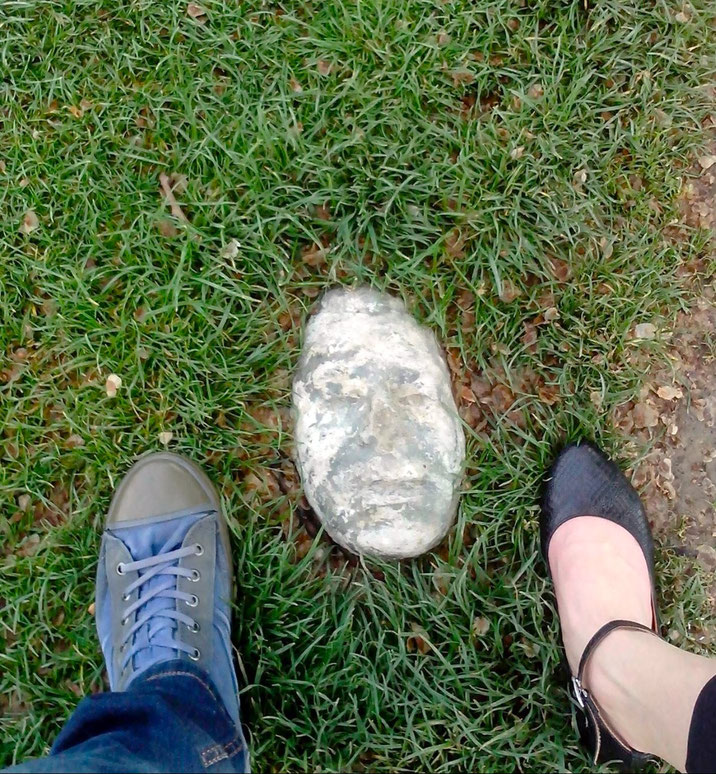
Later, my husband and I walked through a Tehran park. Snow-covered peaks of the Alborz Mountains rose in the distance. We moved slowly along a wet stone path, listening to the sound of water nearby. I told him about my new friend from Pakistan. He recalled Afghans he often encountered through his work in Tehran.
“There are people who are like flowers,” he said. “You admire them endlessly, because they are pure inside.”
The next time Maryam came to class, her eyes were lightly lined, and two dark strands of hair slipped out from beneath her scarf. She seemed to glow differently — more openly, more boldly. Everyone noticed the change. I found myself wondering: who, or what, had given her permission to take this step?
When the instructor asked students to come to the board one by one and retell a short text, Maryam stood up. Her Persian was precise, fluent, alive. Then a short, mocking laugh came from the back rows. She fell silent at once, embarrassed, flushing like the sun sinking below the horizon. Seeing her confusion, the lecturer allowed her to return to her seat.
That was the last day I saw Maryam in class. It felt as though someone, out of sheer carelessness, had broken a flower of rare beauty just as it was about to bloom. For several days afterward, I kept expecting the door to open softly and Maryam to take the empty seat beside me once more. But she never returned — not even once.

Write a comment