
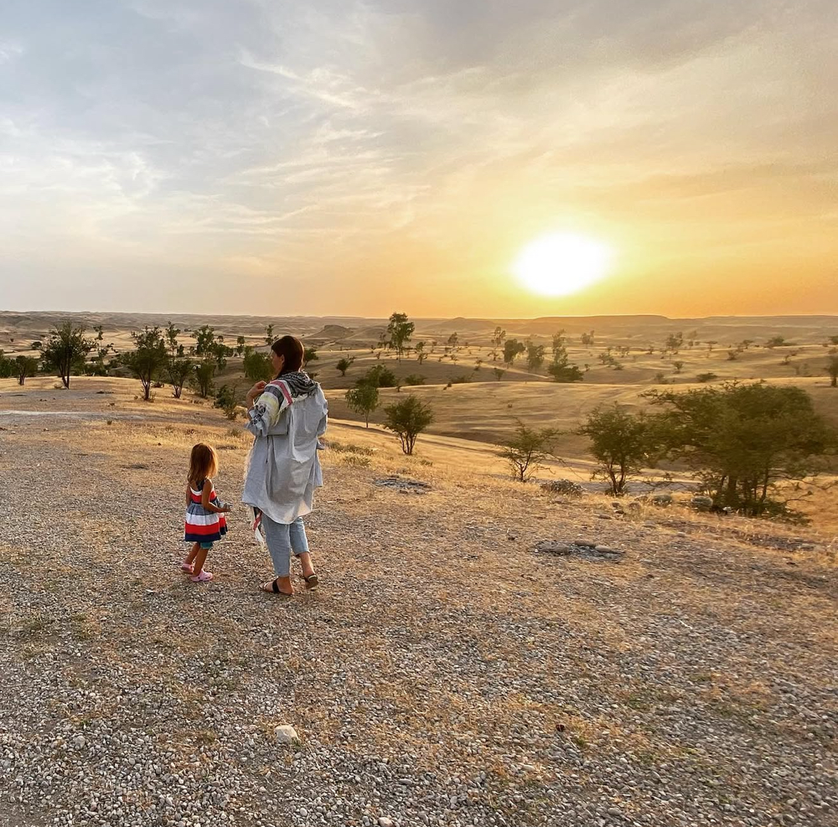
The farther south we moved through Iran, the more the landscape seemed to press back against us. Heat thickened the air until it felt almost tangible, as if the world itself had slowed. Only then did I begin to understand what it truly means when the thermometer climbs to 40°C (104°F)—not just a number, but a physical presence.
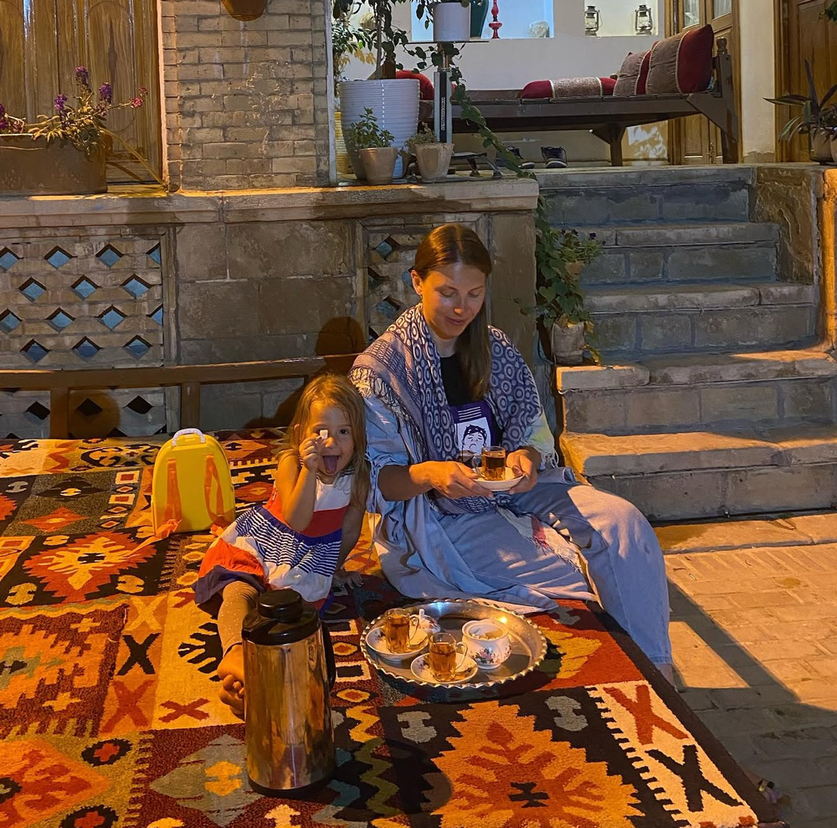
In Khuzestan, one of the oldest continuously inhabited regions on Earth, history is not something preserved behind glass. It is layered into the land itself. Elamites, Persians, Arabs, and countless other civilizations have all passed through this low, sun-scorched plain, leaving behind traces that still shape its rhythm today.
Here, water has always defined survival—and meaning. In Shushtar, elders still repeat an old belief: that anyone who drinks from the city’s ancient canals with an open heart will be granted a long life and will always find their way home. Whether myth or memory, the story lingers in the air like the mist rising from the waterways. For centuries, travelers paused here before long journeys, filling their vessels as if carrying not just water, but protection.

Shushtar itself feels suspended between worlds. The roar of man-made waterfalls echoes through narrow streets, spilling beneath stone bridges and through channels carved more than a millennium ago. It is a city where engineering and legend are inseparable—where the sound of water seems to carry the voices of those who built and crossed it long ago.
By the early centuries of the Common Era, Shushtar had already become a center of early Christianity in Western Asia. But its foundations go much deeper. As early as the Achaemenid Empire, engineers began shaping an ambitious irrigation system around the Karun River—one that would sustain vast sugarcane plantations already thriving by 226 CE. Later, under the Sasanian Empire, the city was transformed into something extraordinary: an island-city woven into a living network of canals, bridges, and diverted rivers.
Centuries later, during the Safavid period, this hydraulic system was expanded once again—an evolving dialogue between humans and water that, in many places, still survives today.
Beyond Shushtar, the story of this land stretches even further into the deep time of Mesopotamia. Questions that still fascinate us today—how writing was born, why time is divided into sixty-minute hours, or who might be considered the world’s first poet—all lead back to this region between the Tigris and Euphrates. The discipline that studies it is Assyriology: an attempt to reconstruct the earliest chapters of human civilization from fragments of clay, stone, and ink.
It is here that another monumental structure emerges from the dust: the ziggurat.
The word itself comes from the Babylonian sigguratu, meaning “summit” or “raised peak.” These stepped temples once dominated Mesopotamian cityscapes, designed not only as places of worship but as symbolic bridges between earth and the divine.
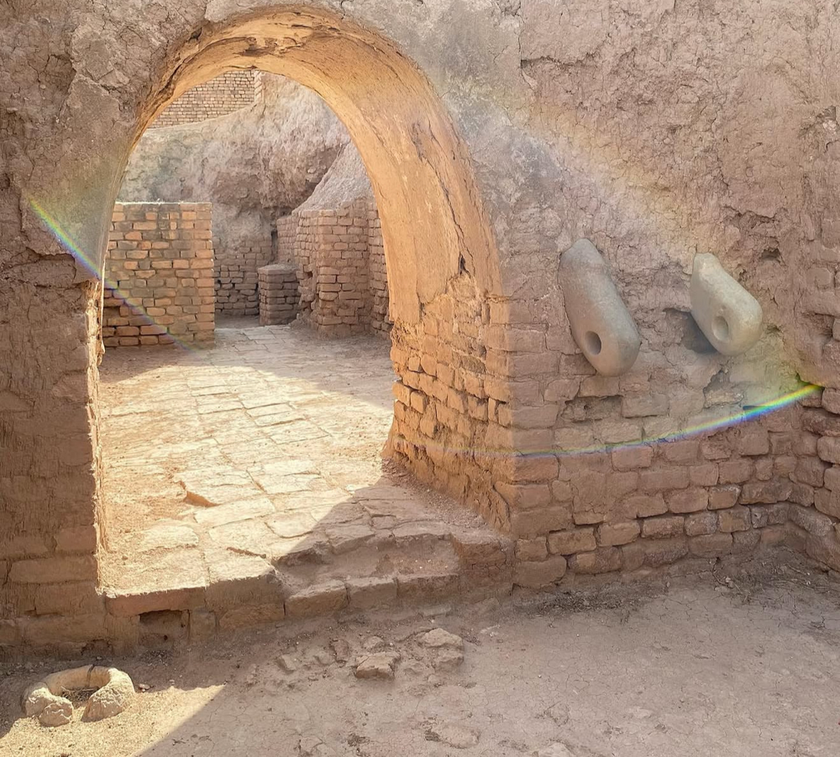
One of the most remarkable lies far from Mesopotamia proper, in southwestern Iran: the Ziggurat of Chogha Zanbil, built around 1250 BCE by the Elamite king Untash-Napirisha in honor of the god Inshushinak.
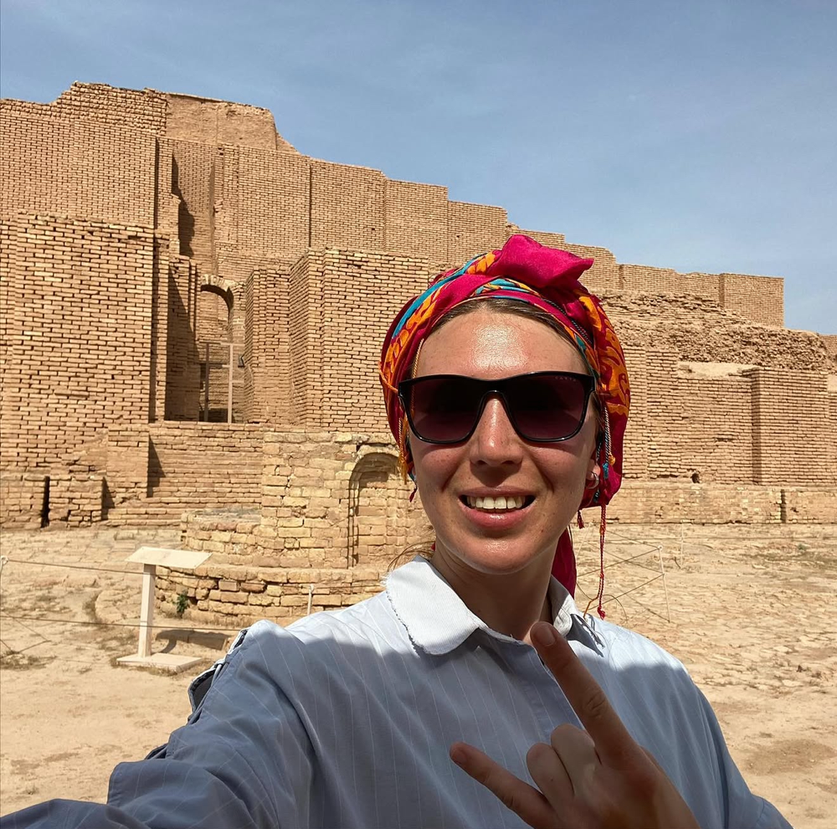
Its rediscovery was almost accidental. In 1935, during aerial surveys conducted for oil exploration, British engineers noticed strange concentric patterns etched into the landscape—perfect circles and geometric outlines where nothing should have been visible from the ground. Excavations later confirmed what the photographs had hinted at: the remains of an ancient Elamite sacred complex.
In the decades that followed, a rare agreement was reached between Iran and French archaeologists. The site would be studied and preserved through international collaboration, marking the beginning of systematic excavation work.
From 1951 to 1962, the project was led by French archaeologist of Ukrainian origin, Roman Ghirshman, born in Kharkiv. Over nearly thirty years in Iran, he became one of the pioneers of Near Eastern archaeology, publishing hundreds of studies that helped reshape our understanding of the region’s ancient cultures.
Among the discoveries attributed to Chogha Zanbil was an extraordinary golden bull statue, weighing several tons—an object that now resides in the Louvre in Paris, far from the sun-baked ruins where it once stood.
Today, Chogha Zanbil remains one of Iran’s most significant archaeological sites. In 1979, it became the first Iranian monument inscribed on the UNESCO World Heritage List—a quiet reminder that beneath the silence of the desert, entire civilizations still wait to be heard.
Write a comment