
Human beings are members of one body, created from a single essence.
Saadi

My life dissolved into the boundless waters of motherhood. Every time I look into my daughter’s eyes now, I see it clearly — an unprepared, softened version of myself. With each passing month of this new life, I had to build endurance and patience, learning to live without rest or sleep.
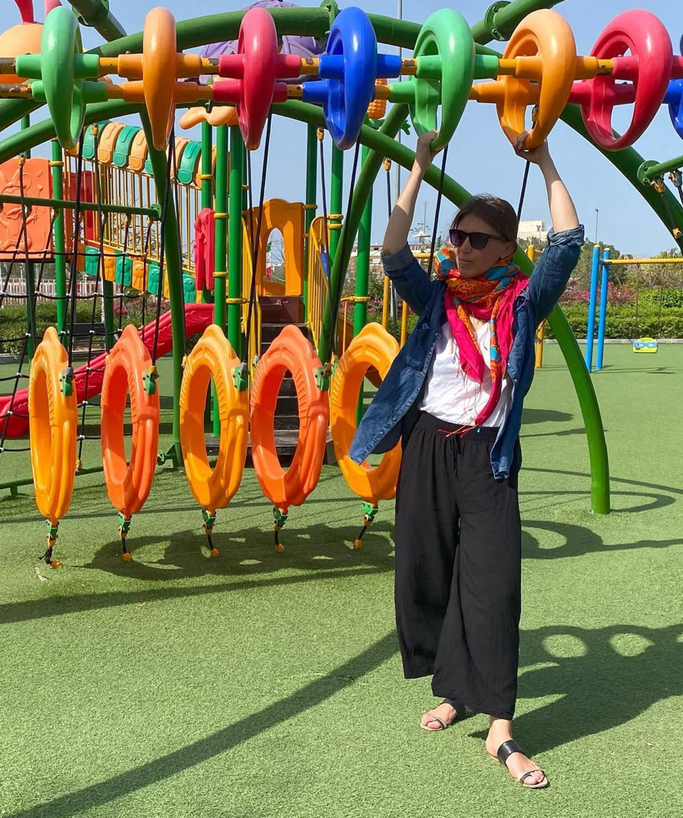
It was winter outside, which meant even heavier smog in Tehran — a suffocating haze that hung over the city and refused to leave. I kept silently scolding myself: these were terrible conditions for a newborn, and we had to get out. So we decided to fly to Kish Island.
This stunning coral island lies in the Persian Gulf, not far from Dubai, and from the airplane window it looks like a pearl resting on the water.
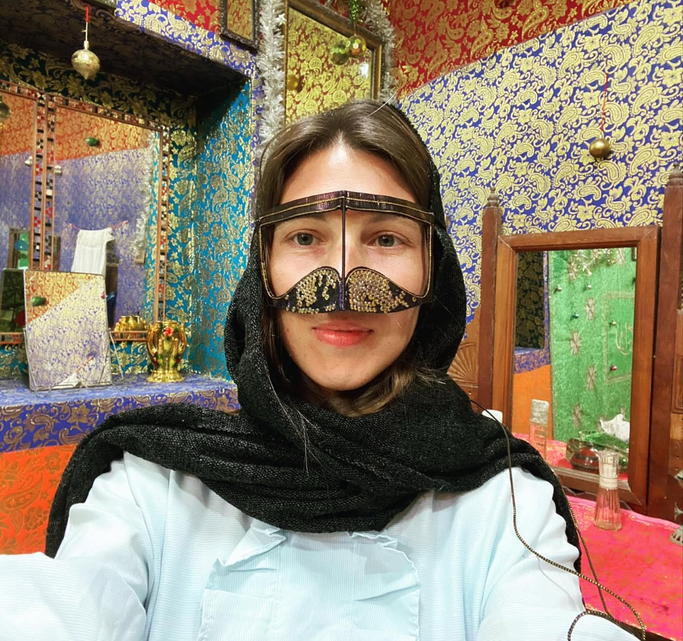
We arrived in the evening to find the island already glowing, buzzing with life. We hopped into a legendary London taxi and cruised along a highway lined with welcoming palm trees toward the house.
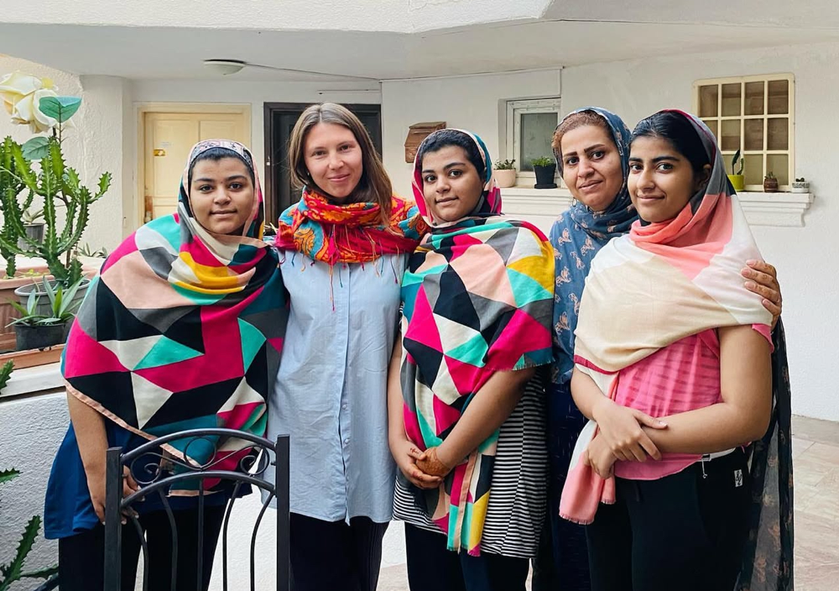
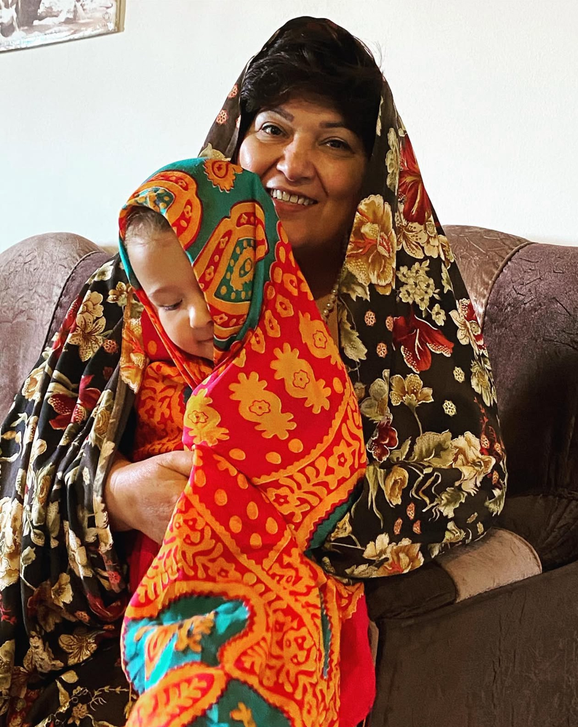
Our neighbors were waiting for us: a woman with sun-kissed skin and chestnut hair, accompanied by her teenage daughter. Both were wrapped in vibrant, colorful chadors. As we greeted one another, they instinctively adjusted their scarves to gently shield their faces—a common gesture in the south when a male stranger, like my husband, is nearby.
But that initial shyness soon gave way to incredible kindness. For nearly a month, this mother—originally from Kerman and fluent in both Pashto and Farsi—spoiled us with local cuisine, bringing us the same dishes she cooked for her own family. It’s a legendary Eastern tradition that instantly wins over a traveler’s heart and stomach.
One morning, I ran into her husband on the porch. Being a "cultured woman", I offered a friendly greeting. He didn’t respond or even glance my way, scurrying off to his business instead. Was he an uneducated lout? Locally, the answer is quite the opposite. Here, such behavior marks a man as exceptionally well-mannered; he wouldn’t dare glance at another man’s wife, ensuring no "dark thoughts" could ever cloud his mind.
Once we settled in, we hurried to the Persian Gulf. The way led through enormous shopping malls filled with fast food — a paradise for shopaholics, though without global luxury brands. Walking through one of them, I saw a mother breastfeeding her baby right there, calmly trying on shoes while the father brought her different pairs. I couldn’t imagine feeling that free at the time — feeding a baby so openly in a public space.
Later, of course, I learned — feeding by the shore, hidden in the shade of a rock, or in those same malls, but inside quiet women’s prayer rooms, which were almost always empty.
Another thing that surprised me, after the London taxi, was the number of American cars. Chevrolet Camaros and Mustangs were especially popular. It felt like an exclusive VIP car club. That’s what an offshore zone looks like.
Daily life here begins closer to night. Locals return home after work in shopping centers and start their household chores — drilling, talking loudly, hammering. When we once protested, “Do you realize what time it is?” the calm reply came: “Half past midnight — it’s just the beginning of the evening.” And the hammering continued. On the island, this is completely normal. People go to sleep closer to dawn.
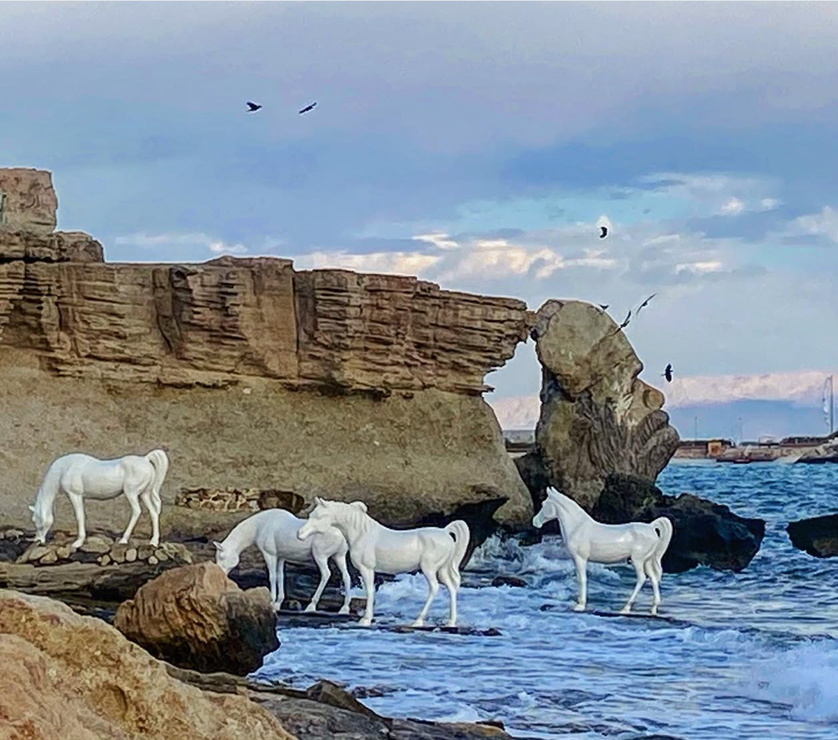
Gradually, my life found a new rhythm among new neighbors and acquaintances — and, most importantly, beside the Persian Gulf that surrounded the island on all sides. On dark nights, the stars felt enormous, closer than ever before.
Almost every day before lunch, a flock of wild green parrots would gather on a dry tree near our house. These became unforgettable moments between feedings and colic.
Whenever we had the chance, we explored the island. I was especially fascinated by stories of hawksbill sea turtles — females that travel thousands of kilometers each winter to reach tropical shores for one single purpose: to lay their eggs. In Persian culture, these creatures symbolize fertility and the underworld.
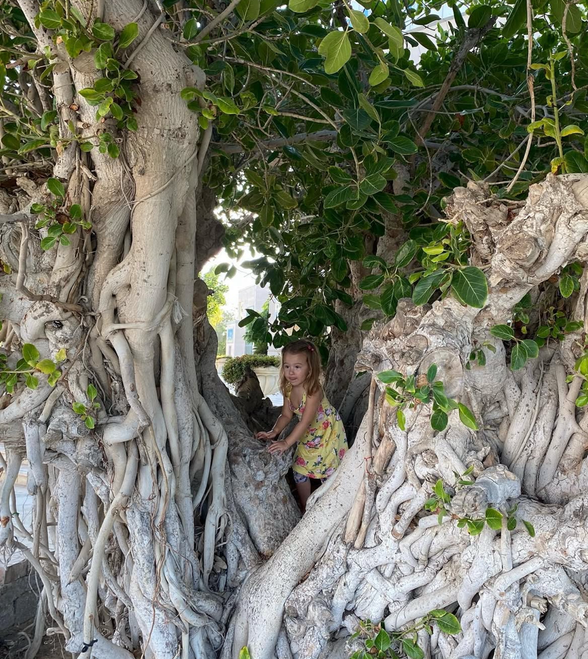
Ancient banyan trees grew almost everywhere, likely brought by Portuguese colonizers. The oldest is about 300 years old. These trees are known for sending aerial roots from their branches down into the soil. It is said that Buddha himself meditated beneath such a tree.
The first to mention Kish in written history was the Greek sailor Nearchus, sent by Alexander the Great to explore the Persian Gulf. In the Middle Ages, the island was an important under a powerful Arab dynasty, supporting a population of around 40,000 people.
For centuries, adventurers came here dreaming of becoming pearl divers. The most famous among them was Marco Polo, who once presented a pearl from Kish to the wife of the Chinese emperor.
The ancient city of Harireh was once the island’s capital and is mentioned in the famous work “Golestan” (“The Rose Garden”) by the Persian poet Saadi. Today, only the ruins of this mysterious city remain.
About 200 years ago, Harireh was far less destroyed. But after treasures were discovered here, locals dug through everything, leaving only ruins behind. The origin of these riches remains unknown — perhaps hidden long ago by the Portuguese. Their presence is now only hinted at by an old cannon near the ruins.
One of the most popular attractions today is the underground city of Kariz, stretching about 15 kilometers beneath the island. It is an ancient aqueduct system. In the past, purified water flowed through underground channels, reaching distant parts of the island and sustaining its people.
This is a very dry region, so water collection and storage were essential for survival. Locals once used this water for drinking, irrigation, and even sold it to sailors from places like Dubai, Oman, and Sharjah.
In the 14th century, the island’s development slowed and remained stagnant until the 1970s, when the last Shah transformed it into a playground for the rich and famous. Quiet fishing villages were soon joined by an international airport, luxury beach hotels, and a casino. A special ferry even ran from Paris.
Pre-revolutionary Kish became one of the most exciting destinations in the region, attracting Arab sheikhs and elites. Queen Farah Pahlavi herself explored the island by bike. There is even a turn named after her, where she once fell.
Today, only an abandoned royal residence reminds visitors of that glamorous past. Time has altered the buildings, but their elegance still whispers of refined architectural taste.
After the 1979 revolution, casinos, bikinis, and cocktails were strictly banned. The focus shifted to domestic tourism and trade. Today, Kish Island is home to over 50 hotels, several theme parks, and endless shopping centers.

Write a comment