
“There they are!” our friend with the scar on his arm said, continuing to drive. “The Towers of Silence…”
A shiver ran through my body at the realization that these were indeed the very dakhmas, as they are called in Iran. They were already several thousand years old, and what stirred the imagination even more was their purpose — they had once served as burial sites for Zoroastrians. According to their beliefs, the “unclean” dead body must not be given to either earth or fire. To preserve this principle, these towers were built. The deceased were brought to the top, where their remains were consumed by vultures — creatures in whose stomachs no bacteria can survive.
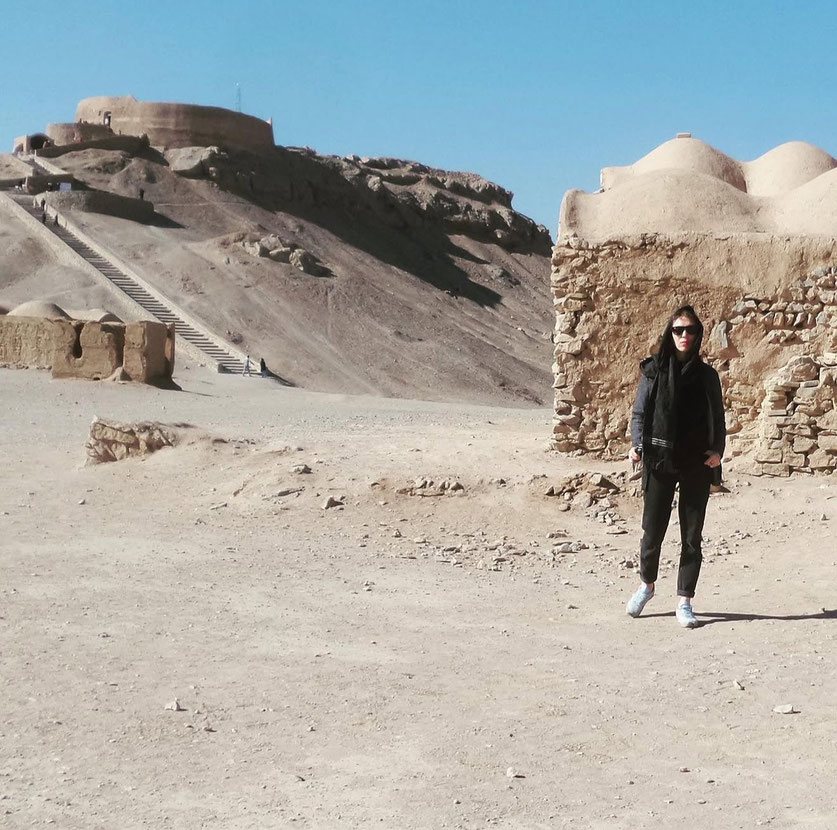
Today, the deep wells inside the towers are filled with stones, and the ritual has gradually been replaced by other burial methods. Cemeteries appeared where graves are sealed with cement to uphold the rule of “neither earth nor fire.” This method became especially relevant again during the coronavirus pandemic.
We were approaching Yazd.
Before the Arab conquest, Zoroastrianism was the dominant religion in Iran. Its philosophy is based on three core principles: think good thoughts, speak good words, and do good deeds. Many Zoroastrians migrated to Yazd during times of persecution and, by paying a tax to the city, were able to preserve their faith.
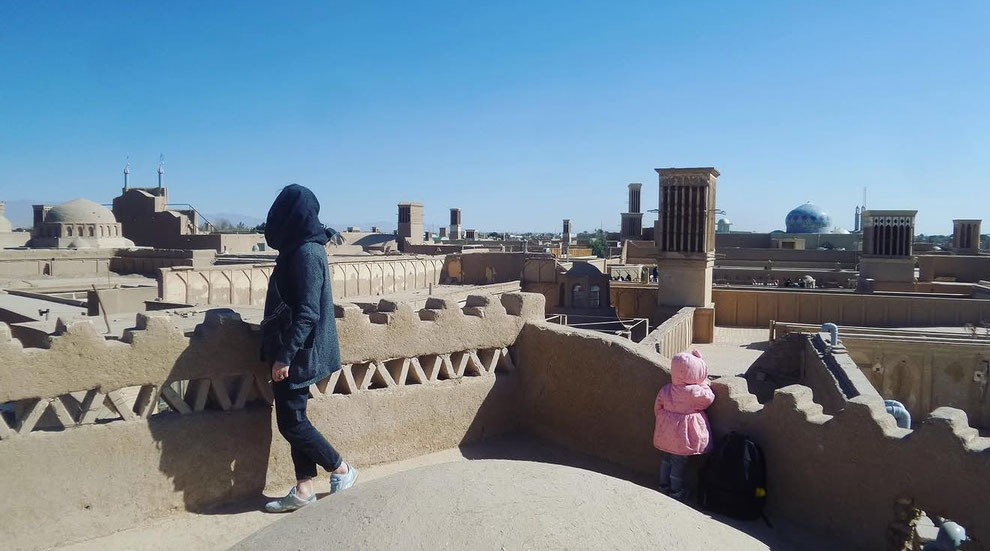
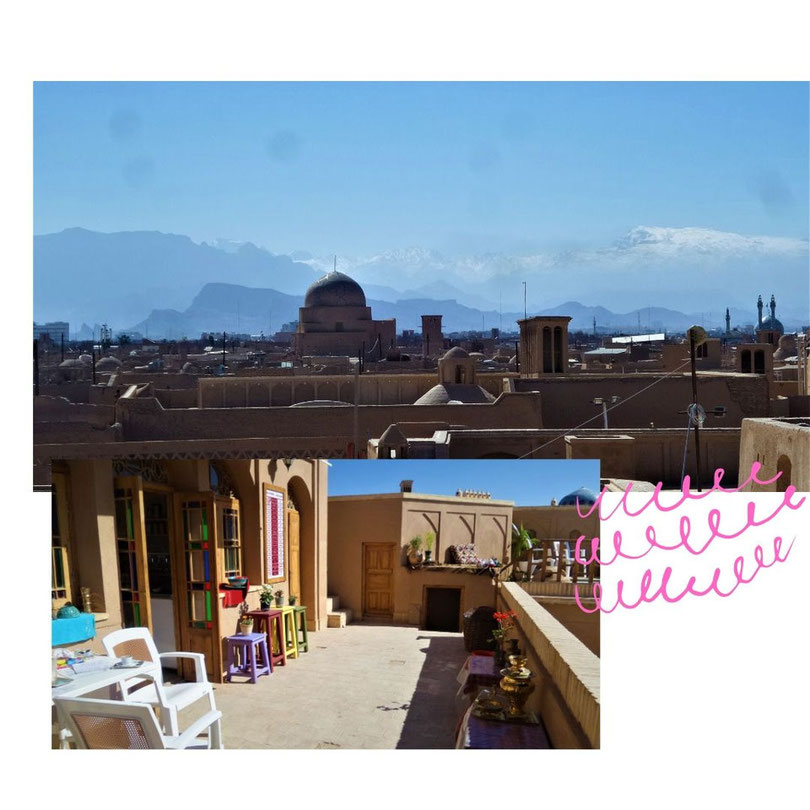
Marco Polo visited Yazd on his way to China and described it as “good and noble.” This city, located in the heart of a vast desert, is a true oasis. Since ancient times, it has been a major stop for international caravans traveling to Central Asia and India. Local weavers were famous worldwide for their silk brocades, and the architecture is perhaps the most traditional Persian style preserved in a hot climate. The dome of the 14th-century Friday Mosque still bakes under the sun, while wind towers (badgirs) continue to provide cooling just as they did a thousand years ago. Though visible from Kashan to the Persian Gulf, they are most developed in Yazd — and one of the tallest stands here.
The historic hotel in an oriental style where we stayed for a few days was located on one of the central streets of modern Yazd. Yet in reality, the city is far from modern and feels more like a setting from a fairytale. Zooming out on Google Maps reveals that it lies between two great Iranian deserts — Dasht-e Kavir and Dasht-e Lut. Yazd is truly a desert oasis. Many travelers along the Silk Road stopped here. Even the formidable Genghis Khan never managed to reach this city. An entire ocean of memories seems lost here, with millions of hidden stories — and above all, it is here that the human desire to explore the spiritual world took root.
Pink light filtered through the stained-glass doors, falling in patches on a wooden sculpture in the hotel lobby. Below it, a plaque bore a quote from the Persian poet Saadi, reminding every visitor that all people are one and deeply influence one another — a call to compassion and awareness.
After check-in, the porter opened another set of colored-glass doors, and we stepped into the enchanting atmosphere of an old caravanserai. Roses grew there, nourished by blue water channels running through a rectangular inner garden. Ninety years ago, Haji Abdul built a guesthouse with a small market on this site. After his death, his sons and grandsons restored the building, preserving its historical identity. Eight years later, it became a hotel. Family business remains a key priority in many Iranian lives.
The city lit up with bright lights and grew even livelier. We approached one of the oldest Persian gardens — Dolatabad Garden. Among evergreen pines and cypresses stood a towering badgir, crowning an ancient mansion. Stained glass appeared here as well. Walking through the dark halls of the summer house, I began to feel cold — the wind catcher was doing its job, especially cooling the space in the evening.
The next day we visited the fire temple — Atashkadeh of Yazd. Built in 1934 with funds from Indian Parsis, it houses a sacred flame that has been burning for about 1,500 years. Hidden and preserved for centuries, it represents continuity of faith. Before Islam spread across Persia, Iranians practiced Zoroastrianism. Many travelers, including Marco Polo, called them fire worshippers — though this is not entirely accurate. Fire symbolizes light, and light is a manifestation of the divine. Along with fire, they revere earth, air, and water — the four elements present in every temple.
How do you think humans first learned to create fire? In Zoroastrian mythology, humanity descends from Gayomart, whose sacrifice gave rise to the universe. Or from the concept of the Universal Man (insan al-kamil), a perfect mirror reflecting the Divine. This idea deeply shaped the Persian understanding of human purpose.
From this perspective, humans are given the power to shape their environment — but not without limits. Their rights come from responsibilities as spiritual beings. Persians lived for millennia in fragile ecological balance without causing destruction like we see today — thanks to harmony between the material and the spiritual.
Persian culture sees humans as both rulers and guardians of nature — a bridge between heaven and earth. Losing this balance leads to destruction.
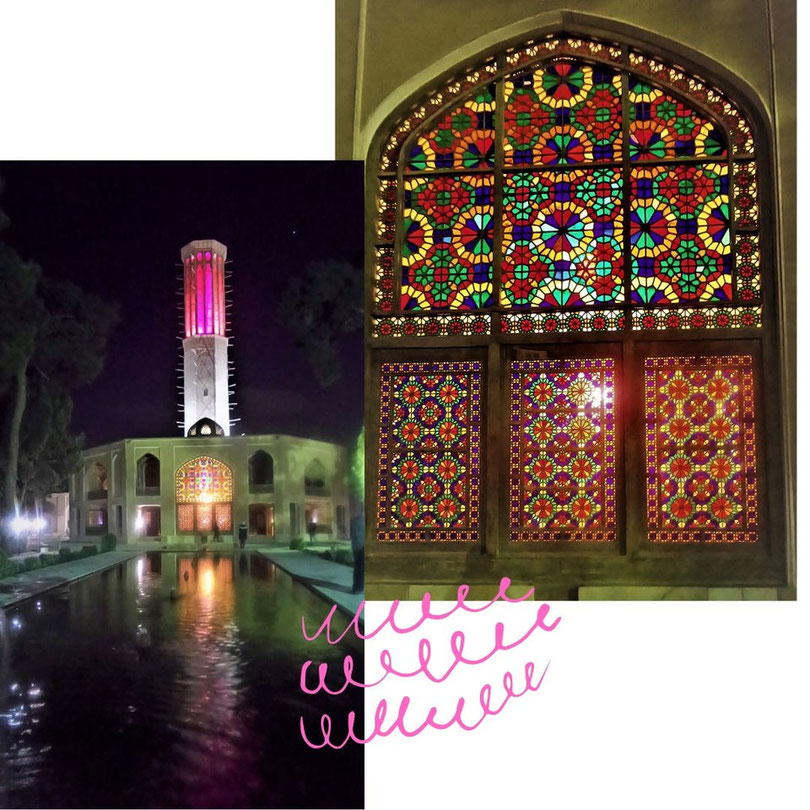
This harmony remains central even today. Life traditionally combines restraint and enjoyment, discipline and participation. This is reflected in daily rhythms — from asceticism to celebration — and even in art, where luxury meets restraint.
Our friend, with the scar on his arm, told us he had visited Yazd before. A Zoroastrian he met asked him not to return. Despite being officially recognized, followers of Zoroastrianism are still closely watched.
Morning. The scent of fresh bread filled the sunlit streets. Where the smell was strongest, lines of people formed. At first glance, Yazd looked like any other Iranian city — grocery stores, countless cars (especially Peugeot), and thousands of motorcycles weaving through traffic.
We quietly approached the fire temple. Inside, only a few tourists stood before the sacred flame. I expected to feel something powerful — but instead, there was only a subtle warmth within.
We visited a nearby museum but saw no Zoroastrians. Perhaps that is why this ancient religion never became global — it was never imposed. It is based on free will: good thoughts, good words, good deeds. Simple in theory, difficult in practice.
There is good and evil, created by Ahura Mazda, and each person must choose their side.

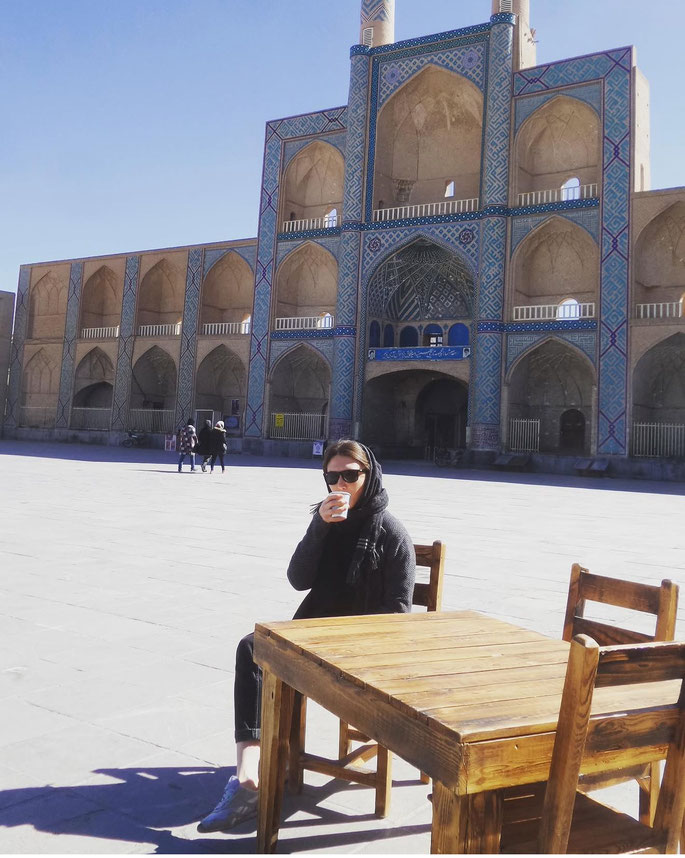
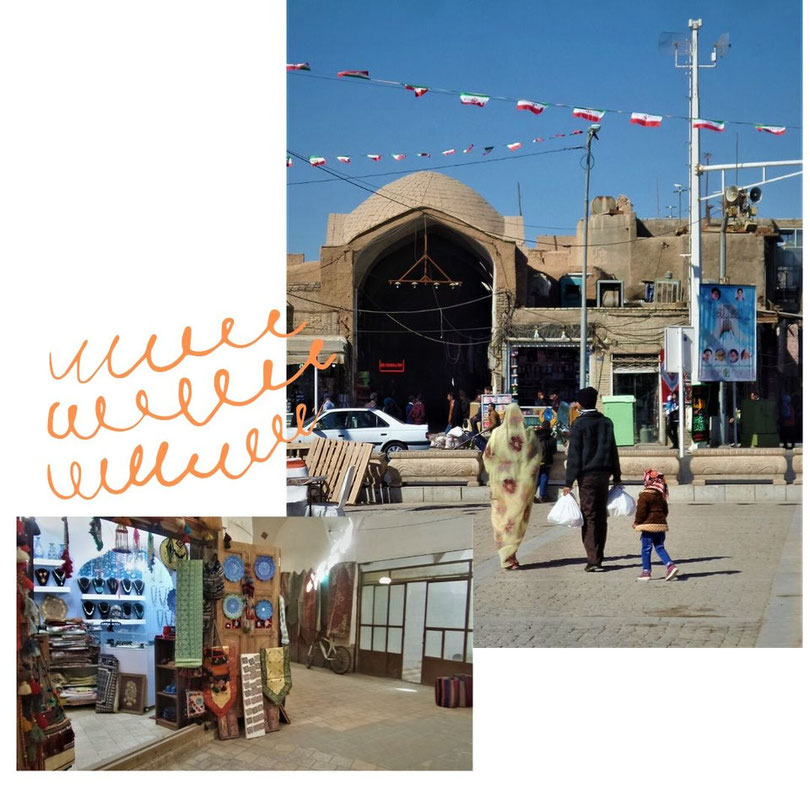
We crossed the square toward the Amir Chakhmaq Complex. The city was full of diverse people.
Finally, we stopped at “Haj Khalifeh Ali Rahbar,” where three generations have been making the best sweets in Yazd. While my husband went inside, women with children gathered around me, asking where I was from. "Is he at least rich?" one woman joked. She laughed and hurried off, her children in tow.
The old city felt like a labyrinth. Without realizing it, we found ourselves on a rooftop café overlooking Yazd — a city built of clay, filled with narrow streets. They say if two people don’t speak to each other in Yazd, they will eventually reconcile — simply because they must meet and talk in these narrow alleys.
Arches connect walls, creating shade — a blessing in the desert — and symbolizing two hands holding each other.
Yazd is situated in one of the most arid regions of Iran and is famous for its qanats—underground water channels that have sustained life here for millennia. First constructed as early as the third millennium BCE, these channels are not just unique cultural landmarks, but remarkable examples of ancient technological progress. In fact, they predate the Roman aqueducts. During my visit to the Water Museum, located in the stunning Kolahdouz family estate built in 1929, I learned the intricate mechanics behind these systems. In the past, such direct and constant access to water was a luxury reserved only for the city’s wealthiest residents.
Children’s voices echoed between terracotta walls as the city continued to restore itself and welcome tourists.
On our last day, we visited the Friday Mosque, built in the 12th century on the site of a former fire temple. Its mosaics and calligraphy exceeded all expectations.
We left the city, returning to the шумный Tehran. Ahead of us lay the landscapes of one of the most mysterious deserts in the world.


Write a comment