
The world is a mirror: what you see in it is what is within you.
Nizami Ganjavi
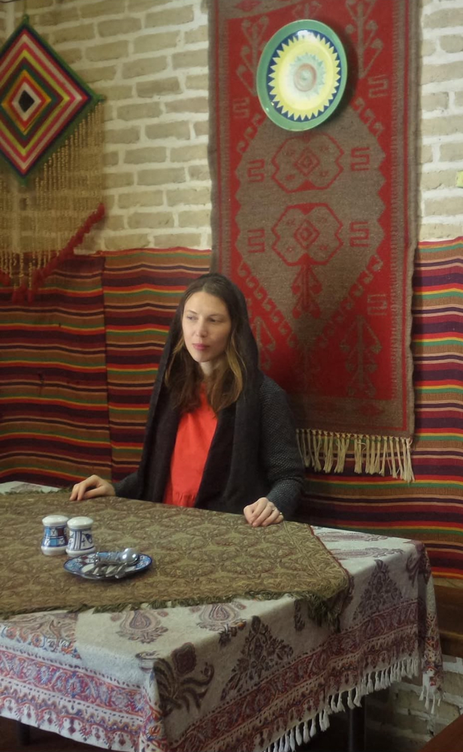
“Once, while driving from Tehran to Shiraz, somewhere in the middle of the desert, the fuel gauge suddenly dropped to zero. And that’s when I got scared,” our friend said, scratching the scar on his right hand. “I started worrying — would I make it in time?”

He was telling us about his adventures while carefully steering the car along the smooth highway. For about two hours, nothing surrounded us but bare mountains of stone and sand. Occasionally, the view shifted to sandy valleys where mirages shimmered in the distance.
We were crossing one of the most lifeless deserts on Earth — the Dasht-e Kavir — heading toward one of the oldest cities in the world, Yazd. Soft music played in the background as I absorbed the stunning landscapes around us, holding my daughter in my arms and thinking how fortunate I was to travel through Iran in our time. It must have been much harder for Marco Polo.
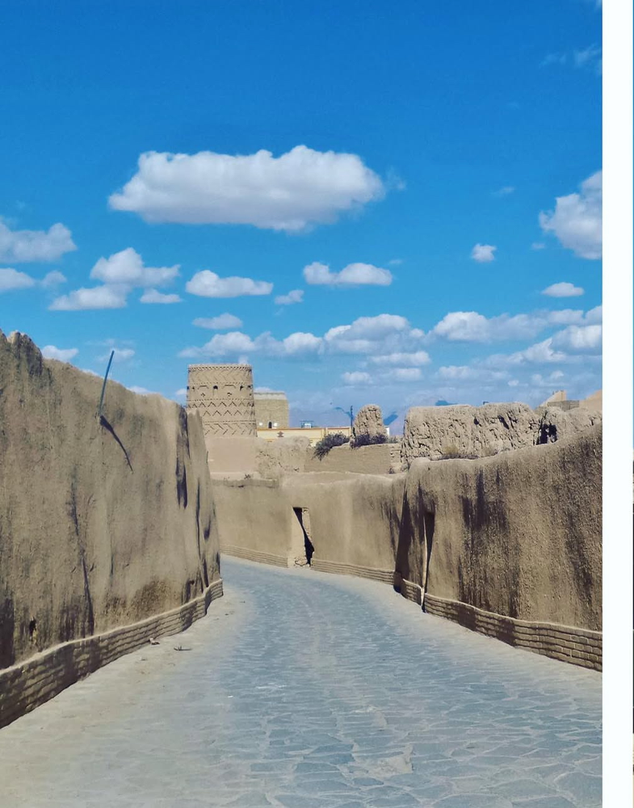
Everything around us glowed in golden-red tones, endlessly stretching under the watchful eye of a giant star called the Sun. A third of Iran’s territory is silent and uninhabited. Vast salt marshes rule here.
After sunset, twilight engulfed us — the red desert slowly faded and disappeared into darkness. We were approaching the city of Nain, still a few hours away from Yazd. We decided to stay there for the night. Another reason was the hotel — very old, built in a traditional style.
Ancient Persia is so rich in the history of cultures and peoples that every place you visit welcomes you with its own unique authenticity. But Nain simply amazed me — it completely captivated me.
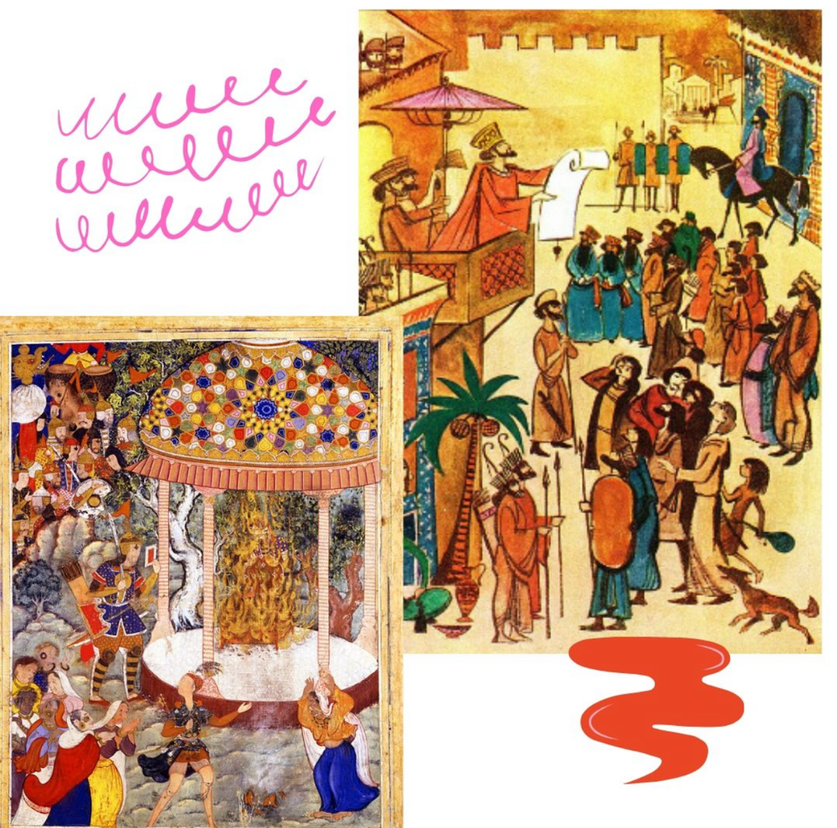
The first thing that caught my eye was the simple yet tasteful wall paintings. Local art and culture trace their roots back to the ancient Median Empire, which once stretched from the southwestern shores of the Caspian Sea to the borders of southern Persia. Its main cities were Rhagae in the north and Ecbatana in the south.
After a long period of subjugation, the Persian king Cyrus freed the Medes and began paying them for their work. That is how the Medo-Persian Empire was formed. From then on, the two peoples shared clothing and customs: they prayed together, worshipped fire, honored the stars — but above all, the Sun and the Moon. Their symbols can still be seen today on tiles, dishes, and carpets.
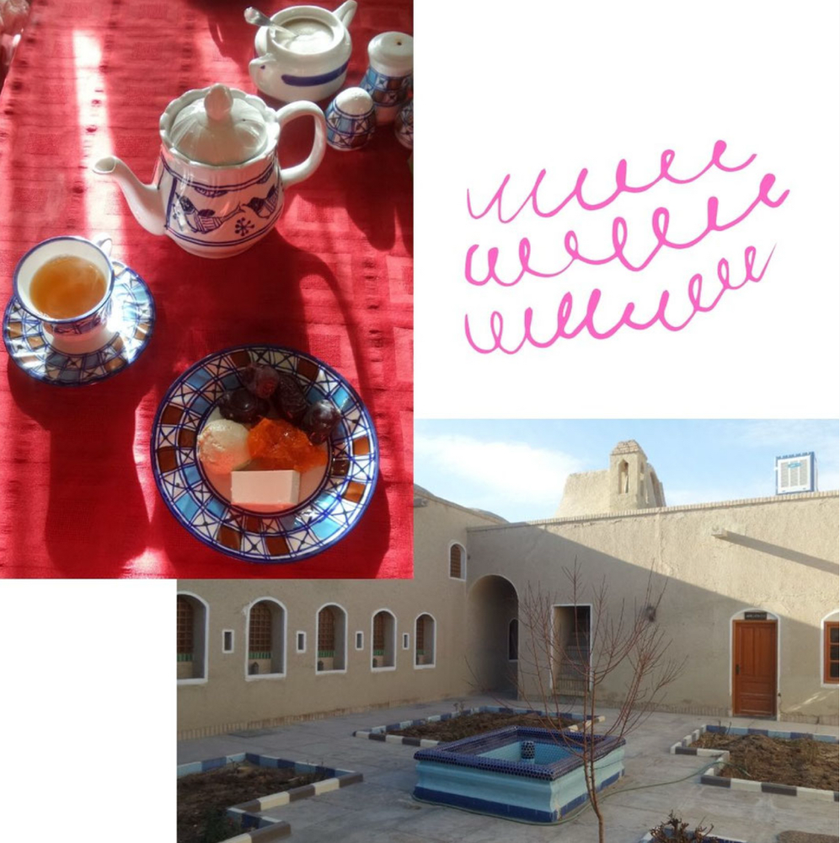
Morning light streamed across the table in the hotel restaurant, turning into dancing reflections. They jumped from a white teapot painted with blue birds and flowers onto a steaming cup of black tea. Suddenly, I noticed my daughter’s little hand reaching for fresh sesame halva. Most likely, it came from the city of Ardakan, where locals grow sesame and, with great mastery, produce some of the finest paste and sweets in the world.
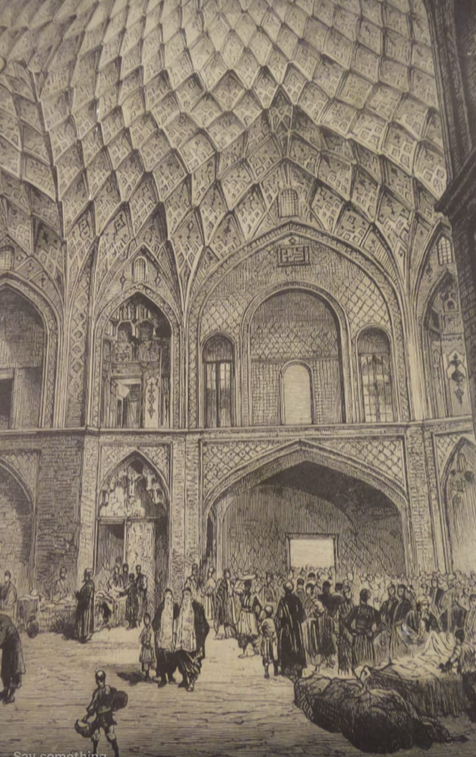
Outside the window, there was a small Persian courtyard with a central pool — a howz — and windcatchers rising above it. On the walls hung engravings depicting Eastern bazaars and caravans, almost sinking into the sands under the weight of goods, merchants, and travelers.

After breakfast, we hurried to explore Nain.
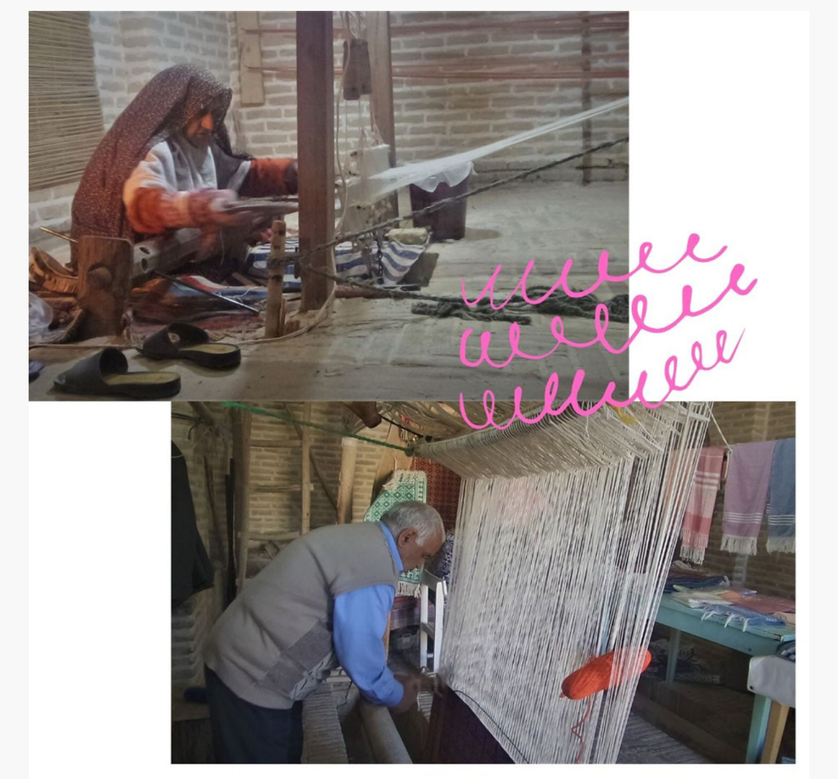
The city is considered the cradle of Persian carpets — here they are still woven according to ancient patterns that craftsmen carefully preserve in their memory, passing knowledge from generation to generation for over a thousand years.
Iran is a highly multicultural country. Each region has its own language or dialect. While everyone speaks Persian, they never forget their native tongue. Some linguists believe the name “Nain” may come from one of the descendants of Noah, called Na’en. Many locals still speak the ancient Pahlavi-Sasanian dialect — the same one used today by Zoroastrians in Yazd. You can also hear the unique Naini dialect everywhere.
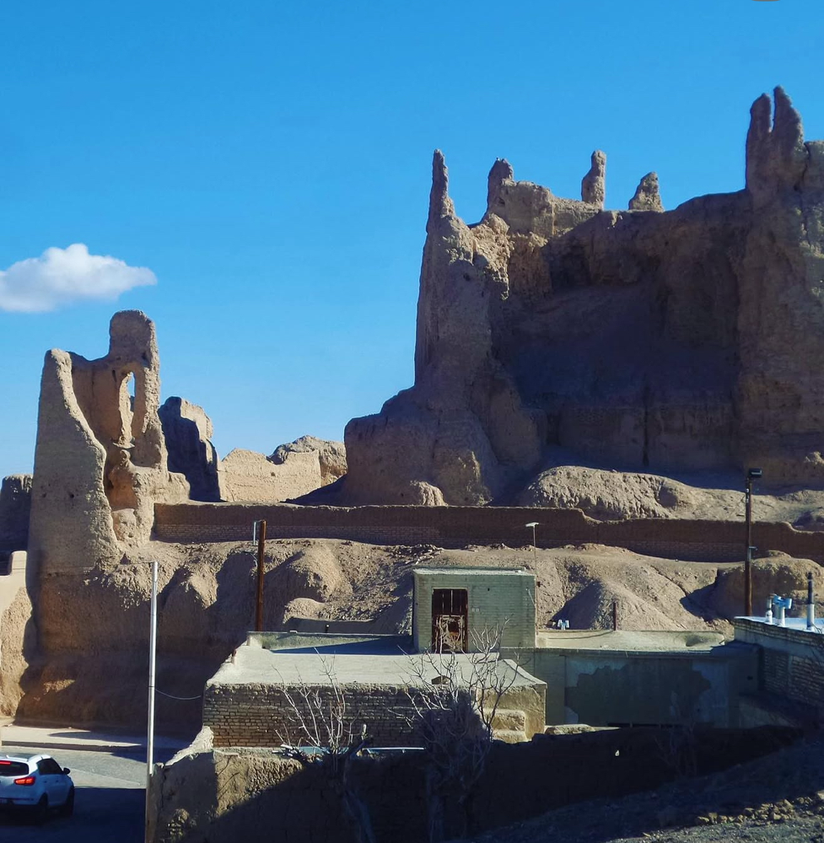
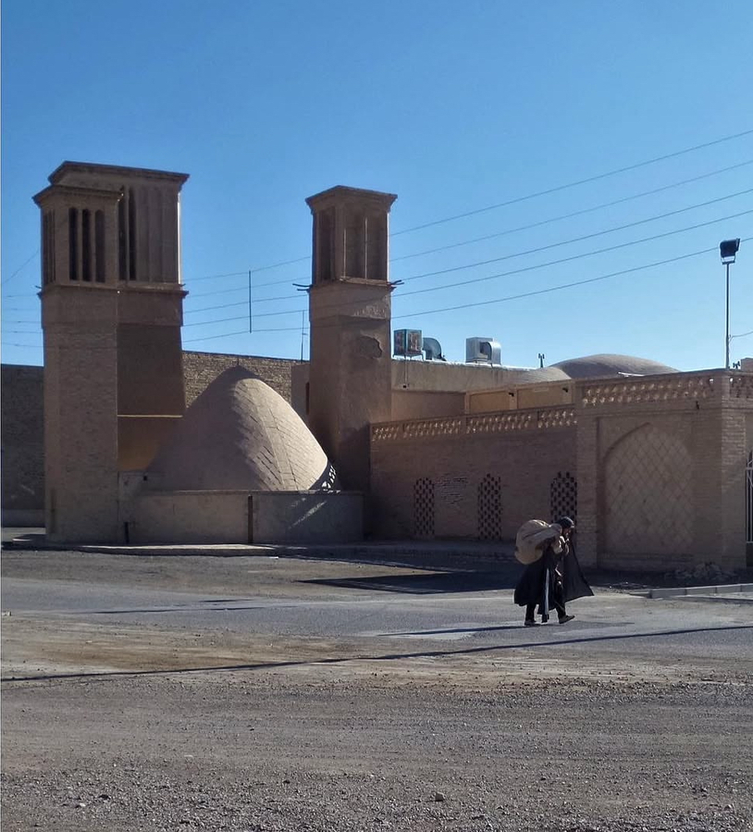
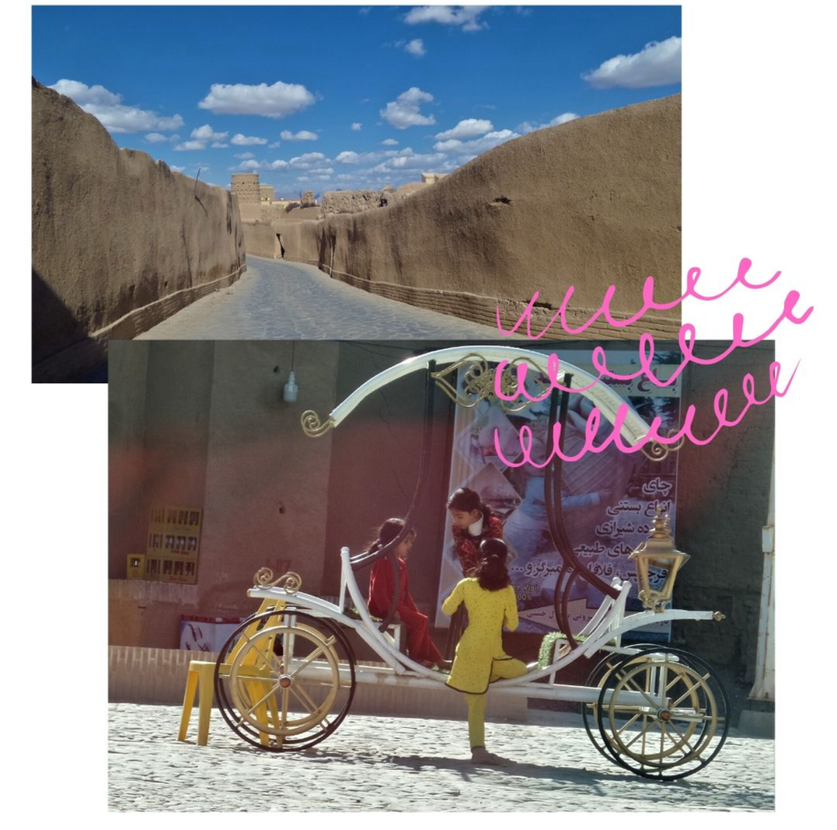
We arrived at the old sandy city. In houses that had survived the destructive force of time, people still lived. Towering above us were the ancient fortifications from the Parthian era. Nearby stood an old reservoir.
More than 3,000 years ago, Persians learned to build underground aqueducts to bring water from the mountains to the plains. As recently as the 1960s, this ancient system provided over 70% of the water used in Iran. Nain is considered one of the best places in the world to see these systems in action.
“Shall we go down?” our friend with the scar asked when he noticed my lingering gaze on the massive clay dome of the reservoir.
And there we were, descending steps that disappeared into darkness. Suddenly, it felt as if an invisible force was pushing us back. It became eerie, and I wanted to return quickly to the bright sunlight. Perhaps ancient Parthian secrets still live there.
A Roman historian once claimed that the Parthian Empire was founded by the Scythians — the same people who migrated from Iran to the steppes of the Northern Black Sea region. Or was it the other way around?
One of their largest settlements was located just a few kilometers from my home in Ukraine, in Kholodnyi Yar. It was called Motronyn. Today, there is a women’s monastery and the spring of Saint Onuphrius the Great, who himself came from Persia.
I think of Ukraine and miss its nature and four seasons. Here in the desert, it is always warm and sunny — in summer, unbearably hot. Ukrainian lands are rich in fertile soil and fresh mineral water. And what about the Dnipro River?
The nomadic Scythians, whom the Medes once considered a harsh people, found their paradise near my home in Ukraine. Every time I pass the burial mounds scattered from Kyiv to Crimea, I search for a connection between myself and them — as if completing an invisible cycle of events. My mind refuses to believe it’s all just coincidence.
On our way to Yazd, we stopped in the town of Meybod for a quick meal. As everywhere in Iran, foreigners were warmly welcomed. In no time, we became friends with the entire staff.
After eating, we left the restaurant and headed to the car. At that moment, I decided to take one last photo. Sitting on the steps of an old building, smiling at my husband, I noticed the restaurant manager nervously stepping outside. When he saw me, he slowed down and pretended to casually walk around.
And suddenly it hit me — we had forgotten to pay for lunch!
Of course, we went back and paid the bill. But the manager never admitted that he had already rushed out after us.


Write a comment