
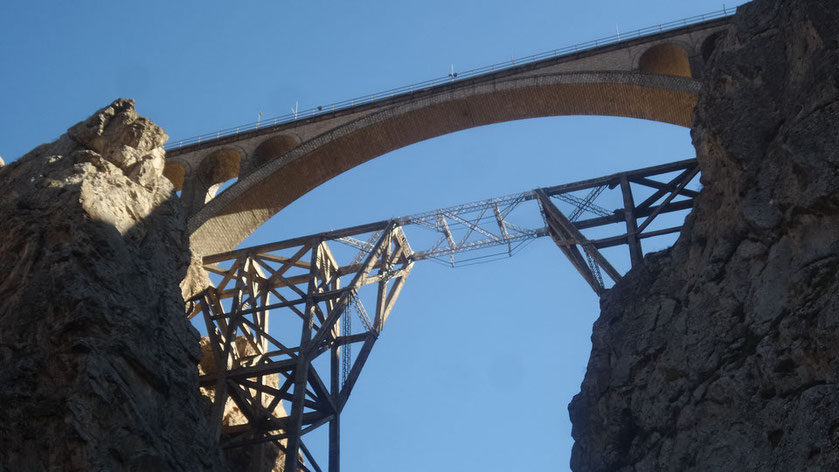
During the reign of Reza Shah Pahlavi, Iran began to reshape itself. Change was visible not only in the tailored European jackets that became part of men’s dress or in the gradual abandonment of the chador. It was deeper than fashion. It was a nation redefining its future.
At the heart of this transformation stood an ambitious vision — the Trans-Iranian Railway, a line that would bind the Caspian Sea to the Persian Gulf, stitching mountains, valleys, and deserts into a single artery of steel.
In 1933, the contract for the North–South railway was signed with the Danish engineering company Kampsax. The project began with its most formidable challenge: the Northern Alborz Mountains, rising sharply toward the Caspian coast.
Several European companies had already failed to force a railway through the Alborz range. The greatest obstacle lay in the steep incline leading to the Gaduk Tunnel and the vast valley carved between two mountains. It seemed almost impossible terrain for a train.
Yet the director general director of Kampsax made a bold promise — 900 kilometers of railway in six years. Payment would come not in paper currency, but in gold: one and a half grams of pure gold for every meter laid.
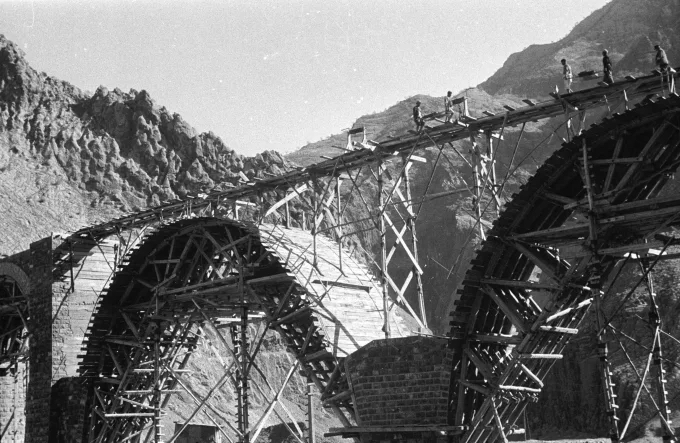
Men and horses climbed higher and deeper into the mountains, carving pathways where none had existed before. Among the workers was our grandfather. He was no longer young. He had become a father, and responsibility had settled firmly on his shoulders. Providing for his family was no longer a hope — it was a necessity.
He worked as a carpenter on what would later become the Veresk Bridge — a structure suspended above a dramatic mountain gorge. The tools were simple: hand drills, basic equipment, raw human strength. Most astonishing of all, the bridge rose without metal reinforcements — a testament to engineering precision and courage.
Ismail spent his days on narrow paths and steep cliffs. By evening, exhaustion filled his bones. But at dawn he would climb again — high onto the rock face, where the wind cut sharply and the valley yawned below. The work was dangerous. Many had already lost their lives laying this railway. That danger was precisely why carpenters were paid double.
Still, he carried a quiet faith within him — stubborn, steady, unbreakable. He hoped for safety. He hoped for gold. But most of all, he hoped to build a better life for the woman who had chosen him over her family’s comfort and wealth.
At night, her brown eyes — darkened with kohl — would return to him in memory.
Near the workers’ camp, he lit a small fire and brewed black tea. The mountains cooled quickly after sunset. The stars above the Alborz shone with piercing clarity.
Wrapped in fatigue and longing, beneath that vast sky, our grandfather finally fell asleep.

Write a comment