
Human life is a journey: day follows day, and each one steadily leads us forward.
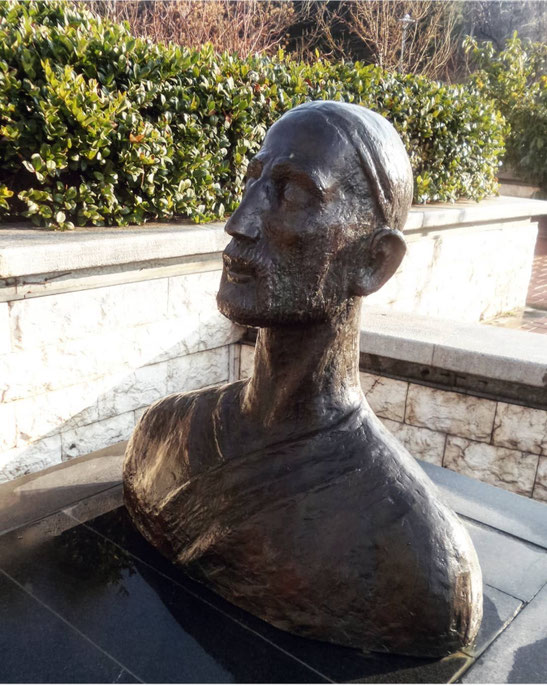
Rudaki
The days rushed forward unnoticed; I spent most of them at the university, continuing to study the Persian language. My second Nowruz was approaching. At some point, the streets of Tehran became surprisingly empty. Although the peaks of the Alborz Mountains were still smoking with white snowstorms, the city was already noticeably warming up.

One spring day before the Persian New Year, my husband and I were sitting by the roadside drinking fresh fruit juice when suddenly a car with a funny Iranian logo—a horse's head—stopped beside us. The back window was stuffed with mattresses, pillows, and blankets. I even thought there might be children sitting behind them. The side window slowly rolled down, and from behind a woman's silhouette, tightly wrapped in a scarf, a long nose peered out, followed by a thick moustache. Finally, the man's face appeared. Holding the steering wheel with one hand and a notebook with a pen-drawn crossroad and arrows in the other, he politely addressed my husband:
"Ogo (author's note: a typical address to a man in Iran), excuse me, how do I get to Ferdowsi Square?"
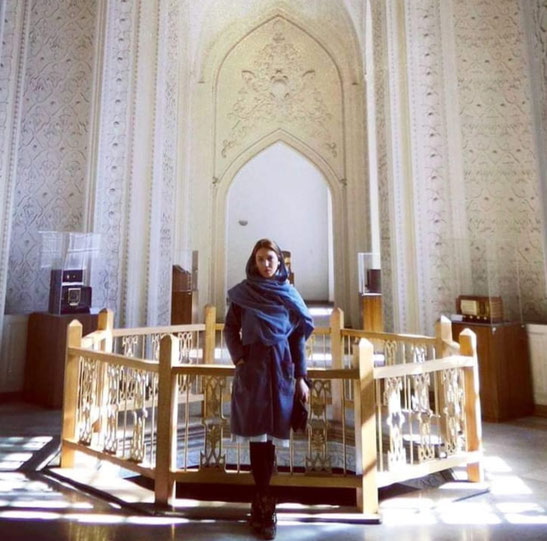
Tehran was slowly emptying of locals and filling up with visitors. Everyone was massively setting off on trips across the country—two weeks of public holidays were officially allocated for this.
At lunch, my husband noted that I was now quite skilfully using a fork and spoon, though sometimes my hands still got confused. My Persian language was becoming clearer to those around me, and much had become clear to me, too. We were eagerly awaiting when most people would leave Tehran so that the air would become at least a little cleaner and oxygen would appear. This is probably the biggest drawback of life in an Eastern megalopolis: you are constantly trying to snatch at least one genuine breath of air from the thick exhaust fumes. Sometimes it feels as if you are inside a huge mechanism that has swallowed you whole. Smog—that invisible enemy of our time—is truly dangerous in the concrete jungle.
Without waiting for "good air," we also set off on a journey. I was still searching for the answer as to why exactly this part of the world attracted me so strongly. It seemed the reason was hidden much deeper than just "I married an Iranian."
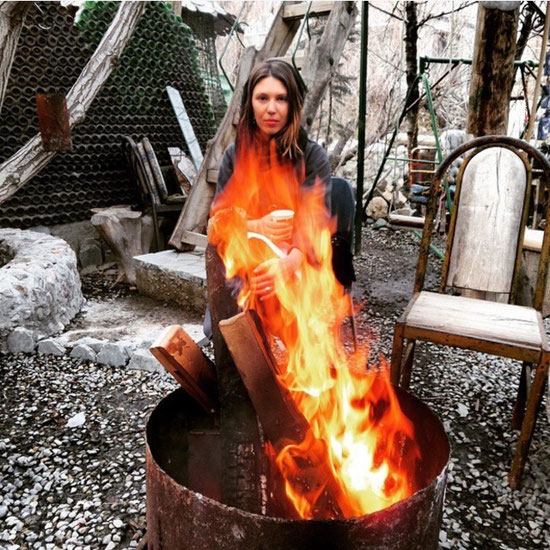
The air was clean and fresh. We two—my beloved and I—were sitting in a green olive grove. We decided to stop near the town of Rudbar and have a picnic. We lit a fire, spread out the popular Iranian oilcloth tablecloth, laid out lunch, and began observing everything around us.
A cemetery was visible nearby. Relatives dressed from head to toe in black stood by a fresh grave. My husband told me about the terrible earthquake that had happened recently. Our attention was suddenly drawn to an athlete jogging nearby: he was rapidly climbing to the top of the hill and descending just as quickly. His efforts seemed heroic. A storm of mixed feelings raged within me: a wave of sadness and fear of the elements was replaced by a trembling pride in the runner. The tireless athlete continued his route. Around us, the giant blades of the wind turbines turned slowly but majestically, creating a sense of unease. In the distance, an elderly woman in a hijab, leaning on a stick and navigating the stones under her feet, drove sheep to pasture. The quiet rustle of the olive grove and the presence of my beloved were calming.
After feeding the remains of our lunch to a stray dog, we set off further—to the village of Masuleh, which is over two thousand years old. This settlement is located in Gilan province, in the very heart of Northern Iranian nature. Travellers are drawn here by the unique Talysh culture and their houses, built in tiers on the mountainside: the roofs of the lower dwellings simultaneously serve as pedestrian pathways for the upper ones.

Write a comment